Macros for Weight Loss: The Best Split, Protein Targets, and a Sample Plan
Macros for weight loss are the split of protein, carbs, and fat that lets you lose fat while keeping the muscle you already have. Calories decide whether you lose weight at all. Macros decide what kind of weight you lose.
That distinction is the whole point of this guide. Two people can eat the same 1,800 calories and get very different results. The one who eats enough protein and trains with resistance loses mostly fat. The one who eats too little protein loses a mix of fat and muscle, gets weaker, and often regains the weight later. The deficit does the work, but your macros for weight loss decide the quality of the result.
This guide shows you how to set macros for weight loss step by step. You will learn the best starting splits, how much protein you actually need in a deficit, how to convert any split into grams with fully worked examples, when to cut carbs and when to cut fat, the mistakes that stall most people, and a sample day with every gram of math shown.
What Are Macros for Weight Loss?
Macros, short for macronutrients, are the three nutrients that supply calories: protein, carbohydrate, and fat. Each gram of protein gives 4 calories, each gram of carbs gives 4 calories, and each gram of fat gives 9 calories. Alcohol gives 7 calories per gram, but it is not a macro, and it does not help fat loss.
When people talk about macros for weight loss, they mean choosing how your daily calories divide among those three nutrients while you eat in a deficit. A typical starting macros for weight loss split might be 33 percent protein, 37 percent carbs, and 30 percent fat. The exact numbers matter less than the method behind them, which this guide covers in full.
Why do macros for weight loss matter if calories decide weight loss? Because each macro does a different job in your body:
Protein builds and protects muscle. It supplies the amino acids your body uses to repair tissue after training. In a deficit, your body is tempted to break down muscle for energy. Enough protein resists that pull.
Carbs fuel training and daily activity. They refill muscle glycogen, which is the stored fuel your muscles use during hard workouts. Cut carbs too low and training quality drops, which hurts the workouts that drive fat loss.
Fat supports hormones and satiety. Your body needs dietary fat to produce testosterone, estrogen, and other hormones, and to absorb vitamins A, D, E, and K. Cut fat too low and hormones suffer, hunger rises, and food becomes joyless.
There is one more reason your macros for weight loss matter: the thermic effect of food. Digesting protein burns roughly 20 to 30 percent of the calories it contains. Carbs cost about 5 to 10 percent to digest, and fat costs about 0 to 3 percent. A higher-protein diet therefore burns slightly more calories during digestion, on top of its muscle and satiety benefits.
If you are new to macro counting entirely, our guide on how to calculate macros covers the general method. This article goes further: it is specifically about setting macros for weight loss, not about macro math in general.
What Is the Best Macro Split for Weight Loss?
There is no single best macros for weight loss split, because the best split depends on your body weight, your training, and the foods you can actually stick to. Anyone who sells one magic ratio is selling simplicity, not science. What research and practice do support is a clear principle: set protein first, keep fat above a floor, and let carbs fill the rest.
With that principle in mind, here are the three splits most people should start from:
| Split | Protein | Carbs | Fat | Best for |
|---|---|---|---|---|
| 40/30/30 | 40% | 30% | 30% | Lifters cutting hard, people who love protein-rich food |
| 35/35/30 | 35% | 35% | 30% | Most people: balanced, easy to follow |
| 30/40/30 | 30% | 40% | 30% | Endurance trainers, people who struggle with low carbs |
Notice what all three have in common: fat stays at 30 percent, and protein never drops below 30 percent. That is the structure that protects muscle and hormones while leaving enough carbs to train well.
The 40/30/30 split is the most popular in cutting communities, and it works well for many lifters. Its risk is that for heavier people, 40 percent protein can overshoot sensible protein targets. A 90 kg man eating 2,300 calories at 40 percent protein would need 230 grams of protein a day, which is about 2.6 grams per kilogram of body weight. That is more than most people need, and it squeezes carbs low enough to hurt training. The worked examples later in this guide show this problem with real numbers, and show the fix.
For macros for weight loss, the 35/35/30 split is the best default for most people. It gives enough protein to protect muscle, enough carbs to train and live normally, and enough fat to keep hormones and hunger in check. If you do not know where to start, start here.
The 30/40/30 split suits people who train hard or do a lot of cardio, and people who simply feel terrible on lower carbs. It still keeps protein at a solid level, so muscle protection is intact. It trades a little satiety for training fuel, which is the right trade for active people.
One honest warning about macros for weight loss: percentages are a shortcut, not the method. Two people on the same 40/30/30 split can end up with wildly different protein intakes if one weighs 60 kg and the other weighs 110 kg. That is why the next sections teach the protein-first method for macros for weight loss, which sets protein from body weight and treats percentages as a cross-check, not the target.
How Much Protein Do You Need to Lose Fat Without Losing Muscle?
Protein is the most important part of macros for weight loss, and it is the one most people under-eat. When you diet without enough protein, a meaningful share of the weight you lose comes from muscle, not fat. Studies of dieters consistently find that without resistance training and enough protein, roughly a quarter of lost weight can be lean tissue. That is the outcome macros for weight loss are designed to prevent.
Here are the evidence-based protein ranges for macros for weight loss, in grams per kilogram of body weight per day:
| Situation | Protein target |
|---|---|
| General adult, minimal activity | 1.2 to 1.6 g/kg |
| Active adult losing weight | 1.6 to 2.2 g/kg |
| Lean, resistance-trained, in a deficit | 2.0 to 2.4 g/kg |
| Very lean athlete, aggressive cut | 2.3 to 3.1 g/kg of fat-free mass |
A few things to notice. First, the standard RDA of 0.8 grams per kilogram is a minimum to prevent deficiency, not a target for fat loss. It is far too low for anyone dieting. Second, the famous Morton meta-analysis found that protein up to about 1.6 grams per kilogram maximized muscle gain in energy balance, but a deficit is a different situation: your body is short on energy, so it needs more protein to protect muscle. That is why the deficit ranges run higher. The International Society of Sports Nutrition position stand recommends 1.4 to 2.0 grams per kilogram per day for active people, and notes that higher intakes may be warranted during calorie restriction. Third, the top range is calculated per kilogram of fat-free mass, not total body weight, because it is meant for very lean people whose body fat is low enough that total weight would overshoot the target.
For macros for weight loss, the practical target is simple: aim for 1.6 to 2.2 grams of protein per kilogram of body weight per day, and lean toward the top of that range if you lift weights and your deficit is aggressive. A 75 kg woman would target 120 to 165 grams per day. A 90 kg man would target 144 to 198 grams per day.
Spread protein across the day. Three to four meals of 25 to 40 grams each works better than one giant protein dinner, because each meal triggers muscle protein synthesis. Breakfast is the meal most people get wrong: a pastry and coffee might deliver 5 grams of protein, which leaves the whole morning unprotected. A Greek yogurt or egg-based breakfast fixes that gap for almost no extra effort.
If you are very overweight, use a realistic reference weight rather than your current weight for the protein calculation, or you will end up with an absurd target. A 130 kg person does not need 286 grams of protein. Using a goal weight or a lean-body-mass estimate gives a sane number. Our protein intake calculator handles this adjustment for you.
One more note, for safety: people with chronic kidney disease or at risk of kidney problems should check with their doctor before adopting a high-protein diet. For healthy adults, the protein ranges in this guide have a strong safety record.
Do I Need Supplements to Hit My Protein Target?
No. Whole foods can cover any protein target in this guide. Meat, fish, eggs, dairy, legumes, and soy are all complete or near-complete protein sources. A protein shake is simply convenient food: useful when you are short on time, traveling, or struggling to hit your target with meals alone. It is not required, and it does not work better than food.
How Do You Convert a Macro Split Into Grams?
This is where most macros for weight loss guides get vague, so here is the exact method with every step shown. You need two numbers to start: your daily calorie target, and your body weight. If you do not know your calorie target yet, our guide on how to calculate TDEE walks through it, or you can use the macro calculator to get a starting point.
The protein-first method for macros for weight loss, in four steps:
- Set protein from body weight: body weight in kg x 2.0 g/kg (use 1.6 to 2.2 depending on your situation).
- Convert protein to calories: protein grams x 4.
- Set fat from body weight: body weight in kg x 0.8 g/kg, then convert to calories: fat grams x 9.
- Carbs get the rest: total calories minus protein calories minus fat calories, then divide by 4.
Worked Example: Woman, 75 kg, Target 1,800 Calories
Sara weighs 75 kg. Her TDEE is 2,200 calories, so a 400-calorie deficit gives her a target of 1,800 calories a day.
Step 1: Protein = 75 x 2.0 = 150 g.
Step 2: Protein calories = 150 x 4 = 600 kcal.
Step 3: Fat = 75 x 0.8 = 60 g. Fat calories = 60 x 9 = 540 kcal.
Step 4: Carb calories = 1,800 – 600 – 540 = 660 kcal. Carbs = 660 / 4 = 165 g.
Sara’s macros for weight loss: 150 g protein, 165 g carbs, 60 g fat.
Check: 600 + 540 + 660 = 1,800 calories. As percentages, those macros for weight loss are about 33 percent protein, 37 percent carbs, and 30 percent fat, which sits right in the balanced zone. Notice that the protein-first method landed her close to the 35/35/30 split without ever starting from percentages.
Worked Example: Man, 90 kg, Target 2,300 Calories, Percentage Method vs Protein-First
Ahmed weighs 90 kg. His TDEE is 2,800 calories, so a 500-calorie deficit gives him a target of 2,300 calories a day.
First, the 40/30/30 percentage method:
Protein: 2,300 x 0.40 = 920 kcal. 920 / 4 = 230 g.
Carbs: 2,300 x 0.30 = 690 kcal. 690 / 4 = 172.5 g, round to 173 g.
Fat: 2,300 x 0.30 = 690 kcal. 690 / 9 = 76.7 g, round to 77 g.
Check: 920 + 690 + 690 = 2,300 calories. But look at the protein: 230 g for a 90 kg man is 230 / 90 = 2.6 grams per kilogram. That is above the range most people need, and it leaves only 173 g of carbs for a man who trains four times a week. The percentage method is not wrong, but it is blunt.
Now the protein-first macros for weight loss calculation for the same man:
Step 1: Protein = 90 x 2.0 = 180 g.
Step 2: Protein calories = 180 x 4 = 720 kcal.
Step 3: Fat = 90 x 0.8 = 72 g. Fat calories = 72 x 9 = 648 kcal.
Step 4: Carb calories = 2,300 – 720 – 648 = 932 kcal. Carbs = 932 / 4 = 233 g.
Ahmed’s macros for weight loss: 180 g protein, 233 g carbs, 72 g fat.
Check: 720 + 648 + 932 = 2,300 calories. As percentages, that is about 31 percent protein, 41 percent carbs, and 28 percent fat. Compared with the percentage method, he gets 50 grams less protein he did not need, and 60 grams more carbs to fuel his training. Same calories, better split.
That is why this guide recommends the protein-first method for macros for weight loss. Percentages are a fine sanity check after the fact. They are a poor way to set the targets in the first place, because they ignore body weight.
Should You Cut Carbs or Fat to Lose Weight?
This is the question that starts the most arguments in weight loss nutrition, and the research answer is refreshingly boring: for fat loss, it barely matters. When calories and protein are matched, low-carb and low-fat diets produce very similar fat loss in controlled trials. The split matters for adherence, training, and hunger, not for some metabolic magic in one macro.
That said, there are real trade-offs, and your situation decides which way to lean.
Cut carbs more if: you are sedentary or lightly active, you have insulin resistance or type 2 diabetes, you prefer rich, fatty foods, or you find that carbs trigger cravings and snacking for you. Many people find that dropping carbs to the 30 percent range in their macros for weight loss makes hunger easier to manage, because protein and fat are more satiating per calorie.
Cut fat more if: you train hard or do a lot of cardio, you love carb-rich foods like rice, potatoes, and fruit, or your workouts feel flat on low carbs. Carbs refill glycogen directly, so hard training runs better on a higher-carb split. A runner or a CrossFit-style trainee usually does better with macros for weight loss at 40 percent carbs than at 25 percent.
Never cut fat below the floor. Dietary fat has a minimum for a reason. Keep fat at or above about 0.6 grams per kilogram of body weight, and at least 20 percent of total calories. Below that, hormone production suffers, fat-soluble vitamin absorption drops, and food becomes so joyless that most people quit. A 75 kg woman should not go below about 45 grams of fat a day, and a 90 kg man should not go below about 54 grams.
Fiber is the hidden fourth factor. Most macro guides ignore it, but fiber changes how a split feels. Aim for 25 to 35 grams of fiber a day from vegetables, fruit, beans, and whole grains. Fiber slows digestion, steadies blood sugar, and adds bulk to meals for very few calories. Two diets with identical macros can feel completely different if one has 15 grams of fiber and the other has 35.
What about keto? A ketogenic split (very low carb, high fat) can work for fat loss, and some people love it. But it is not superior for fat loss once calories and protein are matched, and it makes the protein-first method harder, because fat crowds out protein and carbs. If you enjoy keto and it helps you stick to your deficit, it is a valid choice. If you are choosing it because you think it burns fat faster, that belief is not supported by the evidence.
What Are the Most Common Macro Mistakes for Weight Loss?
- Eating too little protein. This is the number one mistake, and it is the most damaging. A low-protein macros for weight loss plan loses muscle along with fat, which lowers strength, softens your appearance, and makes regain more likely. Fix protein first, before touching anything else.
- Cutting fat too low. Chasing the lowest possible fat number backfires. Hormones suffer, hunger spikes, and meals become dry and unsatisfying. Keep fat at or above the floor in the previous section.
- Blowing the weekend. Tracking Monday to Friday and then eating freely on Saturday and Sunday can erase a whole week of deficit. A 500-calorie daily deficit is 3,500 calories a week. Two un-tracked weekend days can easily add that back. Your weekly average matters more than any single day, so track weekends too, even loosely.
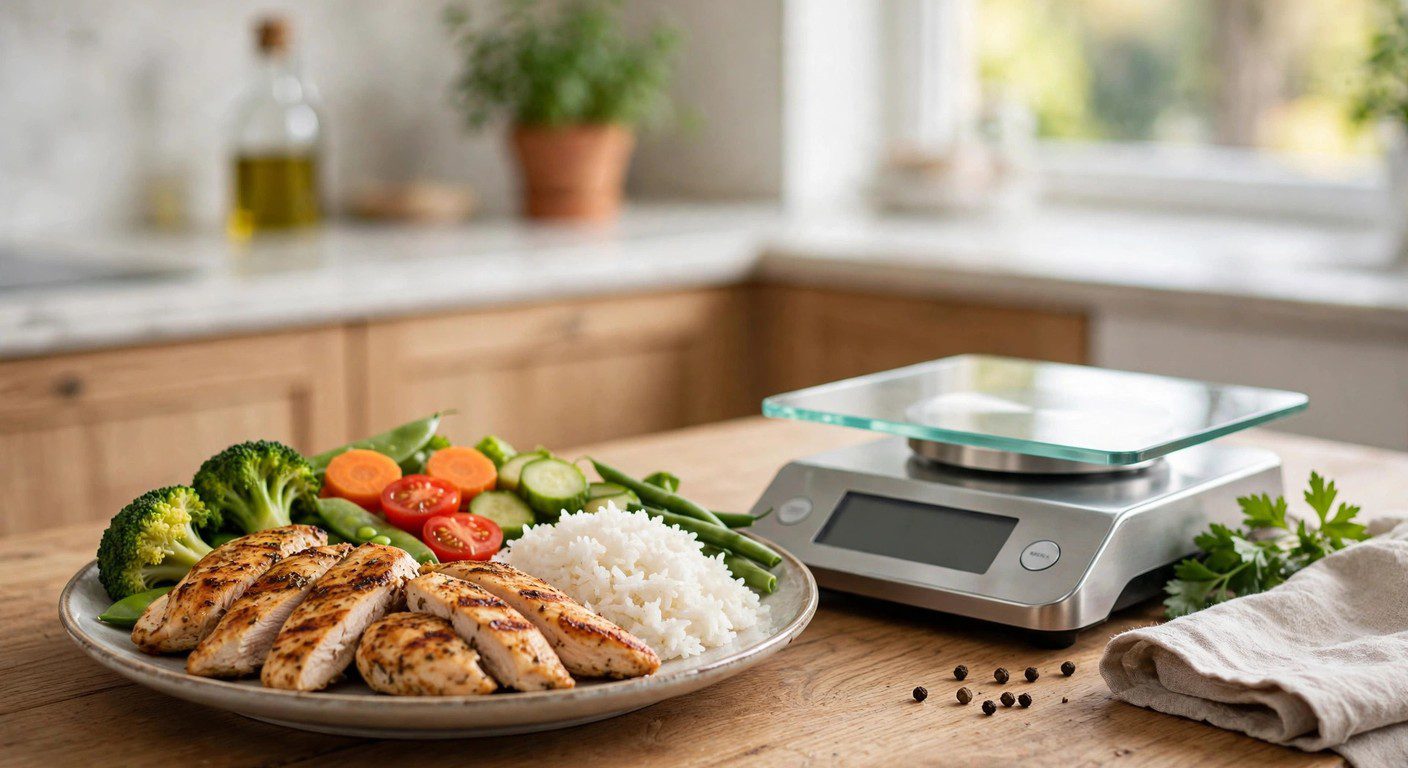
- Eyeballing portions instead of weighing. Portion estimation is notoriously bad. In one real-world example, a person who thought she was scooping 2 tablespoons of nut butter was actually serving double, adding 180 hidden calories and 15 extra grams of fat. A kitchen scale costs little and removes this error. Weigh everything for at least a month to calibrate your eyes.
- Chasing a perfect ratio. Macros for weight loss do not need to be exact. Hitting within about 10 percent of each target on most days is close enough for your body to respond as if you hit them. People who quit because they missed a target by 8 grams of carbs were never failing. They were demanding a precision that fat loss does not require.
- Running too big a deficit. A 1,000-calorie deficit sounds faster, but it costs muscle, energy, and adherence. Research on deficits shows that gaps under 500 calories usually preserve muscle, while much larger deficits are far more likely to eat into lean tissue. A moderate deficit of 300 to 500 calories a day in your macros for weight loss produces steady fat loss of roughly 0.5 to 1 percent of body weight per week.
- Ignoring food quality. Macros for weight loss are not the whole story. A diet of protein bars and diet soda can hit perfect macros and still leave you hungry, low in micronutrients, and struggling. Aim for about 80 percent of your calories from whole, nutrient-dense foods, and leave 20 percent for flexibility. That balance keeps the plan livable for months, which is how long real fat loss takes.
What Does a Sample Day of Macros for Weight Loss Look Like?
Here is a full day of macros for weight loss built for Sara’s targets: about 1,800 calories, with roughly 150 g protein, 165 g carbs, and 60 g fat. Every meal is shown with its macro math, so you can see how the day adds up. Food values are approximate label values, which is how real tracking works.
Meal 1, breakfast: Greek yogurt bowl. 200 g nonfat Greek yogurt, 40 g rolled oats, 100 g blueberries. Macros: 26 g protein, 46 g carbs, 4 g fat. Calories: 26 x 4 + 46 x 4 + 4 x 9 = 104 + 184 + 36 = 324.
Meal 2, lunch: chicken, rice, and vegetables. 150 g cooked chicken breast, 150 g cooked rice, 150 g mixed vegetables, 1 tablespoon olive oil. Macros: 53 g protein, 52 g carbs, 20 g fat. Calories: 53 x 4 + 52 x 4 + 20 x 9 = 212 + 208 + 180 = 600.
Meal 3, snack: cottage cheese, apple, and almonds. 150 g low-fat cottage cheese, one medium apple, 20 g almonds. Macros: 22 g protein, 33 g carbs, 13 g fat. Calories: 22 x 4 + 33 x 4 + 13 x 9 = 88 + 132 + 117 = 337.
Meal 4, dinner: salmon and sweet potato. 150 g cooked salmon, 200 g sweet potato. Macros: 32 g protein, 40 g carbs, 18 g fat. Calories: 32 x 4 + 40 x 4 + 18 x 9 = 128 + 160 + 162 = 450.
Evening: protein shake. One scoop of whey protein. Macros: 25 g protein, 2 g carbs, 1 g fat. Calories: 25 x 4 + 2 x 4 + 1 x 9 = 100 + 8 + 9 = 117.
Day totals: 158 g protein, 173 g carbs, 56 g fat. Total calories: 158 x 4 + 173 x 4 + 56 x 9 = 632 + 692 + 504 = 1,828.
That lands within about 2 percent of the 1,800 macros for weight loss target, which is exactly the level of accuracy fat loss needs. Notice how the day is built: protein appears in every meal, vegetables and fruit supply the fiber, and fat comes from olive oil, salmon, and almonds rather than from fried food. That structure is what makes the numbers livable, not just correct.
Two practical notes. First, this plan is an example, not a prescription. Swap the salmon for chicken, the rice for potatoes, or the yogurt for eggs, and the day still works as long as the totals stay close. Second, if you eat the same five meals every day you will quit. Rotate proteins and carb sources across the week while keeping the per-meal protein anchors the same.
Should My Macros Change on Rest Days?
For most people, no. Keeping the same targets every day is simpler and works fine. Advanced lifters sometimes cycle carbs, eating a little more on training days and a little less on rest days, but the difference is small and the complexity is real. If you are new to macro tracking, use one set of targets every day and judge by your weekly trend.
How Do You Adjust Your Macros When Weight Loss Stalls?
A stall is information, not failure. Follow this decision order before changing anything:
Step 1: check adherence first. Are you actually tracking everything, including weekends, cooking oils, sauces, and drinks? Most stalls are tracking gaps, not metabolic mysteries. Weigh your food for a week and see if the stall survives honest tracking.
Step 2: wait two full weeks. Weight bounces with water, salt, carbs, and sleep. A single flat week means nothing. Two flat weeks of honest tracking is a real stall.
Step 3: cut 100 to 150 calories from carbs. Do not touch protein. Do not touch fat. Trim carbs by 25 to 35 grams a day, which is one small serving of rice or one slice of bread. That is enough to restart loss without hurting training or hunger much.
Step 4: add movement before cutting more food. A daily 20 to 30 minute walk burns roughly 100 to 150 calories and improves insulin sensitivity. It is a better first lever than a second food cut, because it does not shrink your meals further.
Step 5: consider a diet break. If you have dieted for 12 to 16 weeks straight, two weeks at maintenance calories can restore hunger hormones, refill glycogen, and make the next fat-loss phase easier. A diet break is not quitting. It is planned maintenance, and people who take them often lose more total fat over six months than people who grind without stopping.
One adjustment to avoid: dropping protein to cut calories. Protein is the last macro you should reduce, because it is the one protecting your muscle. If you must cut, cut carbs first, fat second, and protein never.
How Long Does It Take to See Results from Tracking Macros?
Weight change shows within 2 to 3 weeks of consistent tracking, though the first week or two often includes water weight shifts. Visible body composition changes usually take 6 to 8 weeks. Give any macros for weight loss split at least 3 to 4 weeks of honest tracking before judging it. Adjusting every few days based on daily scale readings is the fastest way to sabotage a good plan.
How Do You Track Macros Without Obsessing?
Tracking macros for weight loss works best as a skill you learn, not a life sentence. Here is how to keep it sane:
Weigh food for the first month. A kitchen scale and a tracking app are the fastest way to learn what portions actually look like. After a month, your eyes are calibrated, and you can estimate most meals accurately.
Use the 80/20 rule. Aim for about 80 percent of calories from whole, nutrient-dense foods, and let 20 percent be flexible. A plan that allows a dessert or a restaurant meal is a plan you can follow for months.
Track weekly averages, not daily perfection. One bad day does not matter. Seven days of roughly-on-target eating does. If your weekly average calories and protein are close to target, you are succeeding, even if Tuesday was messy.
Pre-log your day. Entering your meals in the morning takes five minutes and removes a hundred small decisions later. People who pre-log hit their targets far more often than people who log after eating.
Stop tracking when you have learned the skill. Once you can build a day of meals at roughly your targets without an app, you have the skill. Many people maintain their weight successfully by tracking protein and total calories only, and letting carbs and fat float. That is a fine long-term approach.
Frequently Asked Questions
What is the best macro ratio for weight loss?
There is no single best ratio, but a strong starting point is 35 percent protein, 35 percent carbs, and 30 percent fat. Better still, for macros for weight loss, set protein from body weight at 1.6 to 2.2 grams per kilogram, keep fat at or above 0.6 grams per kilogram, and let carbs fill the remaining calories. That protein-first method adapts to your body, while fixed percentages do not.
How many grams of protein should I eat to lose weight?
For macros for weight loss, aim for 1.6 to 2.2 grams of protein per kilogram of body weight per day. For a 75 kg person, that is 120 to 165 grams a day. Lean, resistance-trained people in a deficit can go up to 2.0 to 2.4 grams per kilogram. Spread it across 3 to 4 meals of 25 to 40 grams each. If you are very overweight, calculate protein from a realistic goal weight rather than your current weight.
Do I need to hit my macros exactly every day?
No. Hitting within about 10 percent of each target on most days is close enough. Your weekly average matters far more than any single day. A day that lands 8 grams over on carbs and 5 grams under on fat has no measurable effect on fat loss. Consistency over weeks is what counts, not daily perfection.
Are low-carb macros better than low-fat macros for weight loss?
When calories and protein are matched, low-carb and low-fat diets produce very similar fat loss. For macros for weight loss, choose based on what you can stick to and how you train. If carbs trigger cravings for you, a lower-carb split helps. If you train hard or love carb-rich foods, a higher-carb split works better. Either way, keep protein high and fat above the floor.
Can I lose weight if I only count calories and ignore macros?
Yes, you can lose weight on calories alone, because a deficit drives weight loss. But you may lose more muscle along with the fat, which leaves you weaker and softer at the same weight, and makes regain more likely. Tracking macros for weight loss, especially protein, is what turns weight loss into fat loss. If tracking everything feels like too much, track calories and protein only, and let carbs and fat float.