What Is Muscle Mass? How to Measure It and Build It (With Examples)
Muscle mass is the total weight of the muscle tissue in your body. It includes the muscles you train in the gym, the muscles that hold you upright, and the muscles that keep your heart beating and your food moving through your gut.
Most people think about muscle mass only when they want to look better. That is a fair reason, but it is far from the whole story. Your muscle mass decides how strong you are, how many calories you burn at rest, how well your blood sugar is controlled, and how independently you will live in old age. It is one of the most important health numbers you own, even though no bathroom scale shows it directly.
This guide covers the full picture. You will learn what muscle mass actually includes, how it differs from fat-free mass and FFMI, how to measure it with and without a scan, what a healthy percentage looks like for men and women, why it matters far beyond appearance, and a practical plan to build it and keep it.
What Is Muscle Mass?
Muscle mass is the combined weight of all the muscle tissue in your body. In a healthy adult, it typically makes up roughly 30 to 45 percent of total body weight, depending on sex, age, training, and body fat.
To see how that works in numbers, take a man who weighs 80 kg with a muscle mass percentage of 38 percent:
Muscle mass = 80 x 0.38 = 30.4 kg
So about 30.4 kg of his body is muscle tissue. The rest is fat, bone, organs, water, and connective tissue.
Muscle tissue is not dead weight. It is metabolically active, which means it burns calories around the clock, even when you are asleep. It stores glucose, which helps keep blood sugar steady. It pulls on your bones when you move, which keeps bones dense. And it is the tissue that produces every movement you make, from climbing stairs to carrying groceries.
One common confusion is the difference between muscle mass and muscle strength. They are related but not the same. Muscle mass is how much muscle you have. Muscle strength is how much force that muscle can produce. Training increases both, but strength also depends on your nervous system, your technique, and how your muscle fibers are recruited. Two people with the same muscle mass can have different strength, and a beginner often gets stronger for weeks before the muscle visibly grows.
What Are the 3 Types of Muscle?
Your body has three types of muscle tissue, and only one of them is the one you train in the gym.
Skeletal muscle. This is the voluntary muscle attached to your bones by tendons. It moves your limbs, holds your posture, and produces force on demand. When fitness trackers, scales, and articles talk about muscle mass, they almost always mean skeletal muscle mass, because it is the only type you can change with training. It makes up the largest share of your total muscle mass.
Smooth muscle. This is the involuntary muscle in the walls of your blood vessels, your gut, and your airways. It moves food through your digestive system, controls blood pressure by narrowing and widening vessels, and works without any conscious input. You cannot train smooth muscle with weights, and it is not part of the muscle mass number on a body composition report.
Cardiac muscle. This is the muscle of the heart wall. It contracts rhythmically for your entire life without rest and without conscious control. Like smooth muscle, it is not trainable with resistance exercise and is not counted in the muscle mass figure you see on a scan or a smart scale.
So when this guide says muscle mass, it means skeletal muscle mass unless stated otherwise. That is the tissue you build with training, lose with age and inactivity, and measure when you track body composition.
How Is Muscle Mass Different From Fat-Free Mass and FFMI?
This is the distinction that confuses most people, so let us settle it with a clear picture.
Fat-free mass (FFM) is everything in your body that is not fat: muscle, bone, organs, water, and connective tissue. Skeletal muscle is one part of that total, roughly 40 to 50 percent of it. So muscle mass is a component of fat-free mass, not a synonym for it.
Here is what that looks like in numbers. Take a man with 69.7 kg of fat-free mass:
Skeletal muscle at 40 percent of FFM = 69.7 x 0.40 = 27.9 kg
Skeletal muscle at 50 percent of FFM = 69.7 x 0.50 = 34.9 kg
So his muscle mass is roughly 27.9 to 34.9 kg, while his fat-free mass is 69.7 kg. The gap between the two is bone, organs, water, and connective tissue. We explain the full FFM picture, including how it differs from lean body mass, in our guide on fat free mass.
FFMI, the fat-free mass index, is a different kind of number again. It takes fat-free mass and divides it by height squared, to compare muscularity across people of different heights. FFMI answers the question “how much lean tissue do you carry for your frame?” while muscle mass answers “how many kilograms of muscle do you have?” Both are useful, but they are not interchangeable. Our guide on FFMI walks through the formula, the categories, and the debated 25 natural limit.
The practical rule is simple. If you want to know how much muscle you have in kilograms, track muscle mass. If you want to compare your overall lean tissue to your height, use FFMI. If you want the total weight of everything that is not fat, use fat-free mass. Pick the right tool for the question you are asking.
Can You Have Too Much Muscle Mass?
In theory yes, but for natural trainees it is rarely a concern. Extremely high muscle can strain joints and make some movements harder, and it usually requires performance-enhancing drugs to reach. For natural lifters, the practical ceiling is described by FFMI, and most people never come close to it. Below that ceiling, more muscle is generally associated with better strength, metabolism, blood sugar control, and health.
How Do You Measure Muscle Mass?
There is no perfect home test for muscle mass, but there are several useful methods, ranging from a free equation to a clinical scan. Each one trades accuracy against cost and convenience.
DEXA Scan
A DEXA scan uses low-dose X-rays to separate your body into bone, fat, and lean soft tissue. It is the most accurate widely available method, and it is the reference standard most other methods are compared against. It also shows where your muscle sits, so you can see differences between arms, legs, and trunk.
Accuracy: The best of any common method, usually within 1 to 2 percentage points for body fat, with a similarly tight read on lean tissue.
Cost: Typically 75 to 150 dollars per scan.
Best for: A reliable baseline, or a check every 6 to 12 months.
BIA Smart Scales
Smart scales send a small electrical current through your body and estimate composition from how the current travels. Muscle and water conduct electricity well, fat does not. The scale uses the resistance reading, plus your height, weight, age, and sex, to estimate muscle mass.
Accuracy: Commonly off by 3 to 8 percentage points for body fat, and muscle mass inherits that error. Hydration, food, and time of day all shift the reading.
Cost: Free after buying the scale.
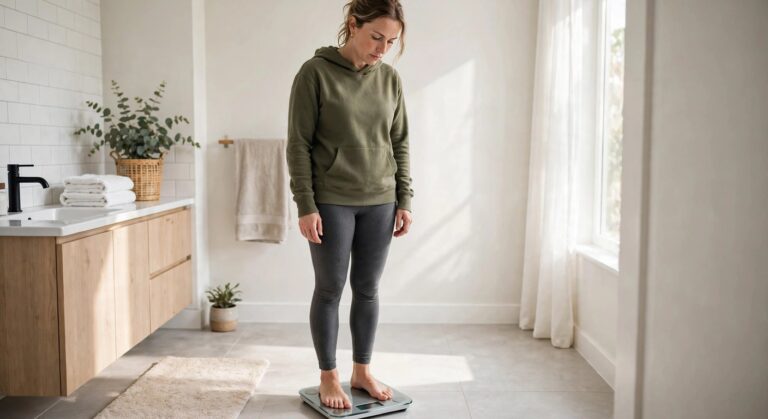
Best for: Tracking trends, not single readings. Weigh yourself first thing in the morning, after the bathroom, before eating, and judge the weekly average.
The Lee Equation (No Equipment)
If you do not have a scan or a smart scale, you can estimate skeletal muscle mass with the Lee equation, developed in 2000 and validated against MRI scans. It uses weight, height, age, and sex:
SMM (kg) = 0.244 x weight (kg) + 7.80 x height (m) – 0.098 x age + 6.6 x sex – 3.3
In this formula, sex is 1 for men and 0 for women, and height is in meters.
Worked example: a 30-year-old man who weighs 80 kg and is 1.80 m tall.
0.244 x 80 = 19.52
7.80 x 1.80 = 14.04
0.098 x 30 = 2.94
6.6 x 1 = 6.6
SMM = 19.52 + 14.04 – 2.94 + 6.6 – 3.3 = 33.92 kg
His estimated skeletal muscle mass is about 33.9 kg. As a percentage of body weight, that is 33.92 / 80 x 100 = 42.4 percent. That is a solid result for a trained man, and it shows how the equation works in practice.
The Lee equation is an estimate, not a measurement. It is useful for a quick ballpark figure and for tracking change over time, but it will not match a DEXA scan exactly, and it is less accurate for very lean or very muscular people.
The Skeletal Muscle Index (SMI)
Clinicians often use the skeletal muscle index, which divides skeletal muscle mass by height squared, the same way BMI divides total weight by height squared:
SMI = skeletal muscle mass (kg) / height (m) squared
Using the man from the Lee example: SMI = 33.9 / (1.80 x 1.80) = 33.9 / 3.24 = 10.5 kg/m2.
SMI is mainly used to screen for sarcopenia, the age-related loss of muscle. For total skeletal muscle mass, the commonly used Janssen cutoffs are below 8.51 kg/m2 for men and below 6.76 kg/m2 for women, with below 7.26 and 5.45 marking the more severe range. Note that a different set of cutoffs, 7.0 for men and 5.5 for women, is used by EWGSOP2 for appendicular muscle only (arms plus legs, measured by DEXA), so do not compare a Lee-equation total-muscle SMI against those appendicular cutoffs. Falling below the relevant line does not diagnose anything by itself, but it is a signal to get a proper assessment.
Which Method Should You Pick?
| Method | Accuracy | Cost | Best use |
|---|---|---|---|
| DEXA scan | Highest | 75 to 150 dollars | Baseline and yearly checks |
| BIA smart scale | Moderate, 3 to 8 points of error | Scale price only | Daily trend tracking |
| Lee equation | Rough estimate | Free | Quick ballpark figure |
| SMI (from any method) | Depends on the input | Free once you have SMM | Sarcopenia screening |
One rule matters more than the method: never compare numbers from different methods. A smart scale and a DEXA scan can disagree by several kilograms on the same person on the same day. Pick one method, measure the same way each time, and track the direction of change. If you need a body fat percentage to feed into any of these calculations, our guide on how to calculate body fat covers every method from tape measurements to DEXA.
How Accurate Are Smart Scales for Muscle Mass?
Smart scales use bioelectrical impedance, which is commonly off by 3 to 8 percentage points for body fat, so the muscle number inherits that error. Hydration, food, and time of day all shift the reading. Use the scale the same way every morning, after the bathroom and before eating, and judge the weekly average trend, not any single reading. For a more reliable baseline, get a DEXA scan or use the Lee equation as a cross-check.
What Is a Healthy Muscle Mass Percentage?
There is no single healthy muscle number, because it depends on your sex, age, height, and training. The most useful way to judge it is muscle as a percentage of body weight, compared against people like you.
Typical reference ranges for adults, based on population data used by body composition devices, look like this:
| Group | Below average | Average | Above average |
|---|---|---|---|
| Men, age 18 to 39 | Below 33% | 33 to 39% | Above 39% |
| Men, age 40 to 59 | Below 31% | 31 to 37% | Above 37% |
| Women, age 18 to 39 | Below 24% | 24 to 30% | Above 30% |
| Women, age 40 to 59 | Below 23% | 23 to 29% | Above 29% |
A few honest notes about this table. First, ranges differ between sources because different populations and devices were used to build them, so treat them as a guide, not a diagnosis. Second, the ranges drift down with age, which is expected: muscle naturally falls as you get older unless you train. Third, athletes sit well above these ranges, and that is normal for them.
Here is what those percentages mean in kilograms. A woman who weighs 65 kg with a muscle mass percentage of 30 percent carries 65 x 0.30 = 19.5 kg of muscle. A man who weighs 90 kg at 40 percent carries 90 x 0.40 = 36.0 kg. The percentage lets you compare people of different sizes fairly, while the kilogram number tells you the absolute amount of tissue you have.
What matters more than any single reading is the trend. If your percentage is rising over months while your weight is stable or falling, you are building muscle or losing fat, both good outcomes. If it is falling year after year, that is the sarcopenia drift, and it is worth acting on.
Why Does Muscle Mass Matter?
Muscle mass is not just about looks. It affects your metabolism, your blood sugar, your bones, your strength, and your ability to live independently. Here are the five reasons that matter most.
It Drives Your Metabolism
Muscle is metabolically active tissue. Classic estimates put resting energy use at roughly 13 kcal per kg per day for skeletal muscle, versus about 4.5 kcal per kg per day for fat. That means each extra kilogram of muscle adds about 13 kcal per day to your resting burn.
Five extra kilograms of muscle adds roughly 5 x 13 = 65 kcal per day at rest. That is real, but it is small. The bigger metabolic benefit of muscle is what it lets you do: train harder, move more, and stay active. Anyone who tells you muscle turns you into a furnace is overselling it. The honest story is that muscle supports a higher metabolism and protects it while you lose weight.
It Controls Blood Sugar
Muscle is the largest storage site for glucose in your body. After a meal, your muscles take up glucose from the blood and store it as glycogen. More muscle means more storage capacity and better insulin sensitivity, which is why resistance training is one of the most effective tools for blood sugar control. People with low muscle are more likely to develop insulin resistance and type 2 diabetes, even at the same body weight.
It Protects Your Bones
When muscles contract, they pull on bones, and that pulling signals bones to stay dense. Resistance training is one of the few things proven to slow or reverse bone loss. People with low muscle are more likely to have low bone density, and the combination of weak muscle and weak bone is what turns a fall into a fracture.
It Fights Sarcopenia
Sarcopenia is the age-related loss of muscle and function. Muscle mass falls by roughly 3 to 8 percent per decade after age 30, and the rate speeds up after 60. After age 50, muscle can fall by 1 to 2 percent per year. That loss is a direct cause of weakness, falls, frailty, and loss of independence in older adults. It also drags down metabolic rate, because the tissue that burns the most calories at rest is the tissue being lost. You can read the clinical picture in detail in an overview of sarcopenia on PubMed.
The good news is that sarcopenia is not inevitable. Resistance training slows it dramatically, even in people who start in their seventies and eighties. Muscle responds to training at every age, which makes it one of the few age-related declines you can genuinely fight.
It Makes Weight Loss Work Better
When people lose weight without resistance training, roughly a quarter of the lost weight can come from lean tissue, not fat. Losing muscle during a diet lowers strength, makes the weight easier to regain, and leaves you looking softer at the same weight. Tracking muscle during a diet tells you whether your plan is working. If your weight drops but your muscle holds steady, you are losing mostly fat, which is exactly the goal.
How Can You Build Muscle Mass?
You build muscle by giving your muscles a reason to grow, then giving them the raw materials and the recovery to do it. The recipe has four parts: training, protein, calories, and sleep. Miss any one and growth stalls.
Train With Progressive Overload
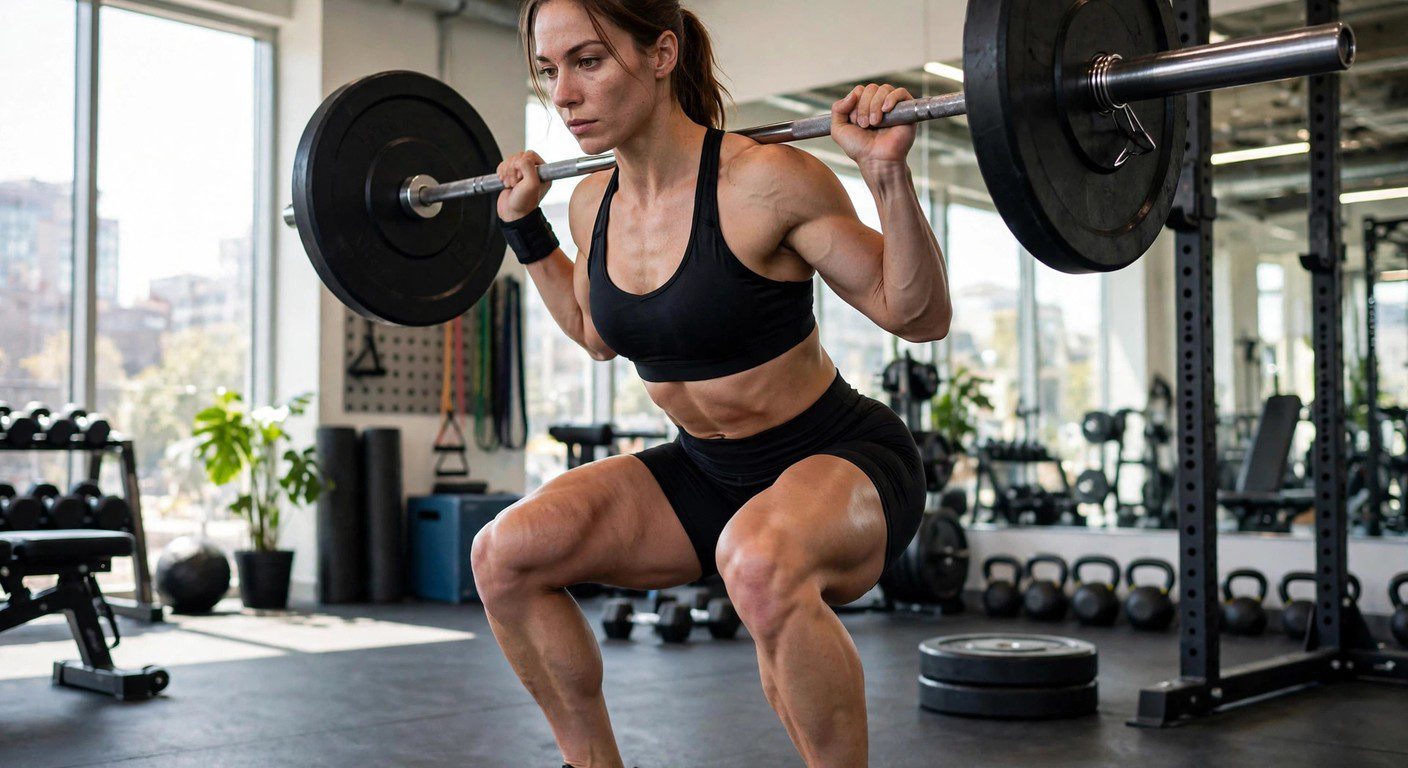
Resistance training is the single most effective way to build muscle. The principle that drives it is progressive overload: gradually asking your muscles to do more over time.
The rules that work:
- Train each major muscle group 2 to 3 times per week. Full-body sessions 3 days a week are a strong default for beginners.
- Use compound movements. Squats, deadlifts, bench presses, rows, overhead presses, and pull-ups work the most muscle per set.
- Add weight, reps, or sets over time. If you lifted the same weight for the same reps last month, your muscles have no reason to grow.
- Train close to failure. The last 1 to 3 reps of a set should feel hard. Easy sets that never challenge you build little muscle.
- Do 10 to 20 hard sets per muscle group per week. Beginners can start at the low end and build up.
Cardio still has a place. Two to three short sessions per week support heart health and recovery without hurting muscle gain. Very high volumes of cardio can interfere with muscle growth, so keep it moderate while building muscle is the priority.
Eat Enough Protein
Protein supplies the building blocks for muscle. Without enough of it, training alone will not build much muscle.
- For muscle gain: 1.6 to 2.2 grams of protein per kg of body weight per day. For an 80 kg person, that is 80 x 1.6 = 128 g at the low end and 80 x 2.2 = 176 g at the high end.
- Spread it across meals. Aim for 25 to 40 grams of protein in 3 to 4 meals per day. Your total daily intake matters more than exact timing.
- Choose high-quality sources. Meat, fish, eggs, dairy, soy, lentils, and beans all work. If you eat mostly plants, combine sources across the day to cover all essential amino acids.
Eat Enough Total Calories
You cannot build much muscle in a large calorie deficit. To build muscle:
- Beginners and people returning after a break can build muscle even in a small deficit, thanks to newbie gains. This is the one window where recomposition, losing fat while gaining muscle, is realistic.
- Everyone else should eat at maintenance or in a small surplus of about 250 to 500 kcal per day. For example, if your maintenance is 2,500 kcal, a muscle-building target is 2,500 + 250 = 2,750 kcal per day.
- If your main goal is fat loss, use a modest deficit of about 300 to 500 kcal per day, keep protein high, and train hard. You will mostly preserve muscle while the fat comes off.
To find your maintenance calories, use our TDEE calculator as a starting point, then adjust based on what the scale and your measurements do over two to three weeks.
Sleep and Recover
Muscle is built during recovery, not during the workout itself. Aim for 7 to 9 hours of sleep per night. Short sleep reduces muscle protein synthesis, increases hunger, and makes training feel harder. Rest days matter too. Training the same muscle hard every day without recovery stalls progress and raises injury risk.
A Simple 4-Week Starter Plan
Here is a plan that turns the advice above into daily action. It assumes you are a beginner or returning after a break. Repeat it, adding a little weight or a few reps each week, and re-measure at the end of week 4.
Week 1: Measure and start. Measure your weight, body fat percentage, and muscle using one method. Write the numbers down. Calculate your protein target and maintenance calories. Train 3 full-body sessions: squat or leg press, bench press or push-up, row, overhead press, and a core exercise. Do 2 to 3 sets of 8 to 12 reps each. Walk 7,000 to 10,000 steps per day.
Week 2: Build the habit. Train 3 sessions. Add a small amount of weight or 1 to 2 reps to each exercise compared with week 1. Hit your protein target on at least 5 of 7 days. Eat at maintenance or a small surplus of 250 kcal if gaining muscle is the priority.
Week 3: Push a little harder. Train 3 sessions. Add another small increase in weight or reps. Check your weekly average weight. If you are gaining more than 0.5 kg per week, trim the surplus slightly. If you are losing weight while trying to gain muscle, add about 200 kcal.
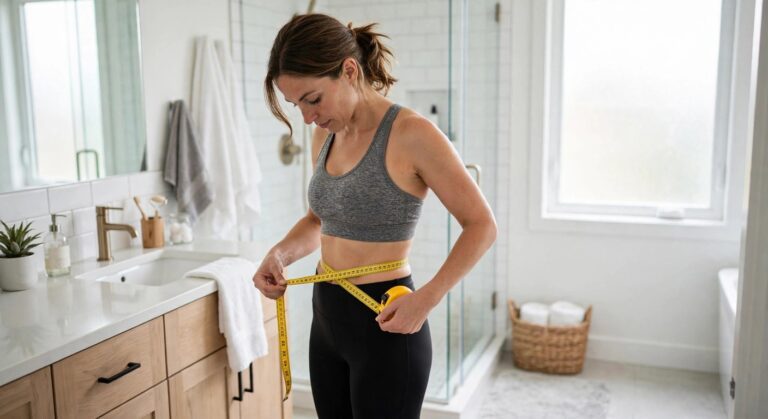
Week 4: Re-measure and adjust. Re-measure with the same method, at the same time of day, under the same conditions as week 1. Compare muscle, not just scale weight. If muscle is up and fat mass is flat or down, the plan is working. Take a progress photo in the same lighting and pose. Photos catch changes the numbers miss.
The plan works because it is boring and repeatable. Three hard sessions a week, enough protein, enough sleep, and one honest measurement per month will build more muscle than any complicated program you quit in week 2.
Can I Build Muscle Mass After 50?
Yes. Resistance training builds muscle at every age, including in people who start in their sixties, seventies, and eighties. The rate is slower than in your twenties, and protein needs stay high, but the direction is the same: training builds muscle, and inactivity loses it. For older adults, building muscle is also one of the strongest defenses against falls, frailty, and loss of independence.
How Do You Keep Muscle Mass While Losing Fat?
Keeping muscle during fat loss is one of the most valuable skills in fitness, because it is what separates a good diet from one that leaves you weaker and softer. Three levers decide it.
Keep protein high. During fat loss, research supports 2.0 to 2.4 grams of protein per kg of body weight per day, higher than the muscle-gain range, because protein protects muscle when calories are low. For an 80 kg person, that is 80 x 2.0 = 160 g to 80 x 2.4 = 192 g per day.
Keep training hard. Do not switch to light weights and high reps when dieting. Keep lifting heavy, close to failure, with the same exercises. The signal that tells your body to keep muscle is heavy resistance, not endless cardio. Cutting training volume slightly is fine, but cutting intensity is what costs muscle.
Keep the deficit modest. A deficit of 300 to 500 kcal per day loses fat at a good pace while preserving muscle. A deficit of 1,000 kcal or more forces your body to break down muscle for energy, and no amount of protein fully prevents that. Slow fat loss keeps more muscle than fast fat loss.
If your muscle is falling during a diet, check these three levers in order: protein first, then training intensity, then deficit size. One of them is almost always the cause.
What Are the Common Mistakes That Slow Muscle Growth?
Most stalled muscle growth comes from a short list of fixable mistakes, not from bad genetics.
- No progressive overload. Doing the same workout with the same weights for months. If the stimulus never increases, growth stops. Log your lifts and beat last week by a little.
- Too little protein. Eating “healthy” but landing at 60 to 80 grams of protein a day. Muscle cannot be built from food that is not there. Hit the 1.6 to 2.2 g/kg range.
- Too little food overall. Training hard in a calorie deficit and wondering why nothing grows. Muscle building needs energy. Eat at maintenance or a small surplus.
- Program hopping. Switching routines every two weeks because a new one looks better. Muscle growth takes weeks of consistent work on one program. Give any program at least 8 weeks.
- Skipping legs and back. Training only the muscles you see in the mirror. Legs and back hold the largest muscle groups, and training them drives the most total growth, including hormone and appetite effects that help the whole body.
- Measuring with the wrong tool or at random times. Comparing a DEXA number to a smart scale number, or weighing after a big meal. Pick one method, measure under the same conditions, and judge the trend over months.
- Expecting fast changes. Muscle mass grows slowly. Measuring every day creates noise that looks like failure. Monthly measurements under identical conditions show the real trend.
How Long Does It Take to Build Muscle Mass?
Muscle growth is slow, and honest expectations keep you consistent. Most beginners gain roughly 0.5 to 1 kg of muscle per month in their first year of proper training. That compounds to about 6 to 12 kg in the first year for someone who trains and eats well, though part of early scale weight gain is water and glycogen, not pure muscle.
The rate slows with experience. Intermediate lifters might gain 0.25 to 0.5 kg per month. Advanced lifters fight for every 1 to 2 kg per year. Strength usually improves faster than visible size at first, because the nervous system learns to recruit muscle before the muscle itself grows much.
Age changes the timeline but does not stop it. People in their forties, fifties, and beyond still build muscle with resistance training, though the rate is slower than in their twenties. The alternative, doing nothing, is a guaranteed loss of 3 to 8 percent per decade. Training is the difference between gaining slowly and losing steadily.
If someone promises you 5 kg of muscle in a month, they are selling something. Real muscle gains take months and years, but they are also the gains that last.
Frequently Asked Questions
What is muscle mass in simple terms?
Muscle mass is the total weight of the muscle tissue in your body. In fitness and body composition, it almost always means skeletal muscle, the voluntary muscle attached to your bones that you train in the gym. It does not include the smooth muscle in your gut and blood vessels or the cardiac muscle of your heart. A typical healthy adult carries roughly 30 to 45 percent of their body weight as muscle.
How do I calculate my muscle mass?
The simplest method is muscle mass percentage: muscle (kg) divided by body weight (kg), times 100. For a direct estimate without a device, use the Lee equation: SMM (kg) = 0.244 x weight (kg) + 7.80 x height (m) – 0.098 x age + 6.6 x sex – 3.3, where sex is 1 for men and 0 for women. For the most accurate number, get a DEXA scan. For tracking trends, a smart scale used the same way every morning works well.
What is a good muscle mass percentage?
For men aged 18 to 39, 33 to 39 percent is average and above 39 percent is above average. For women aged 18 to 39, 24 to 30 percent is average and above 30 percent is above average. Ranges drift down with age, and athletes sit well above them. Compare yourself to people of your own sex and age group, and pay more attention to your own trend over months than to any single reading.
Is muscle mass the same as lean body mass?
No. Muscle mass is one part of lean body mass. Lean body mass, like fat-free mass, includes muscle plus bone, organs, water, and connective tissue. Skeletal muscle is roughly 40 to 50 percent of fat-free mass. So if your fat-free mass is 70 kg, your muscle is roughly 28 to 35 kg. The terms are often used loosely in fitness writing, but they are technically different measurements.
How much muscle mass can I gain in a year?
A beginner who trains 3 times a week, eats 1.6 to 2.2 grams of protein per kg of body weight, and eats at maintenance or a small surplus can realistically gain about 6 to 12 kg of muscle in the first year, though part of early scale weight gain is water and glycogen. Intermediate lifters gain more slowly, roughly 3 to 6 kg per year, and advanced lifters fight for 1 to 2 kg per year. Consistency beats any shortcut.