
Visceral Fat: What It Is, Why It Matters, and How to Reduce It
Visceral fat is the deep belly fat you cannot pinch, and it matters more for your health than the number on your bathroom scale. It sits inside your abdominal cavity, wrapped around your liver, pancreas, and intestines, where it quietly changes how your body handles blood sugar, cholesterol, and inflammation. You can carry too much of it and still look slim in clothes, and you can carry a soft layer of pinchable fat and still be at lower risk. That is why this topic deserves its own guide.
This guide explains visceral fat in plain language. You will learn what it is, how it differs from the soft fat under your skin, why it is dangerous, whether you can have too much of it without looking overweight, how to estimate it at home with a tape measure, what DEXA scans, MRI scans, and smart scales can and cannot tell you, and how to reduce it with a realistic plan backed by research. Every number comes with a worked example, so you can judge your own situation instead of guessing.
What Is Visceral Fat?
Visceral fat, also called visceral adipose tissue (VAT), is fat stored deep inside your abdomen. It lines the walls of your abdominal cavity and surrounds your internal organs, including your liver, pancreas, intestines, and kidneys. In a healthy adult it makes up roughly 10 percent of total body fat, and a small amount of it is normal and even protective, since it cushions your organs.
Problems start when the amount grows. A calorie surplus over months and years fills this deep store first in many people, especially men and postmenopausal women. Genetics decide a large part of where your body prefers to store fat, which is why belly fat runs in families. Age, falling activity, poor sleep, frequent alcohol, chronic stress, and a diet heavy in ultra-processed food and sugary drinks all push storage toward the abdomen as well.
You can often feel the difference. A belly that is firm, round, and pushes outward, sometimes called a beer belly or apple shape, usually carries more of this deep fat. A belly that is soft and pinchable carries more subcutaneous fat, the layer just under the skin. The firm belly is the one to worry about, even though it looks like solid muscle or bloating to many people.
One important point: this deep fat is not just stored energy. It is metabolically active tissue. It releases free fatty acids and inflammatory signals into the portal vein, the blood vessel that runs straight from your gut to your liver. That direct pipeline to the liver is the main reason this deep fat causes so much more harm than the same amount of fat stored on your hips or thighs.
How Is Visceral Fat Different From Subcutaneous Fat?
Subcutaneous fat is the fat just under your skin. You can pinch it on your arms, thighs, and belly. It stores energy, insulates your body, and cushions you against bumps. It is not harmless in large amounts, since excess subcutaneous fat often comes with more visceral fat, but on its own it is far less dangerous.
This deep fat is different in location, feel, and behavior. It sits deep, feels firm rather than soft, and acts almost like an endocrine organ, producing hormones and inflammatory compounds that affect your whole body. The Cleveland Clinic explains the contrast clearly in its visceral fat versus subcutaneous fat guide, including why doctors worry far more about the deep kind.
Here is the comparison at a glance:
| Feature | Subcutaneous fat | Visceral fat |
|---|---|---|
| Location | Just under the skin, all over the body | Deep inside the abdomen, around organs |
| Feel | Soft and pinchable | Firm, pushes the belly outward |
| Job | Energy storage, insulation, cushioning | Surrounds organs, metabolically active |
| Health risk | Lower on its own | High, linked to diabetes, heart disease, and fatty liver |
| How to measure | Calipers, tape measure | Waist proxies at home, DEXA or MRI for a direct number |
The practical lesson is simple. Two people can weigh the same and carry the same total body fat, yet face very different risks, because one stores it mostly under the skin and the other stores it mostly around the organs. Where you store fat matters at least as much as how much you store.
Why Is Visceral Fat So Dangerous?
Visceral fat is dangerous because of where it drains. Its free fatty acids and inflammatory signals flow through the portal vein directly into the liver. The liver responds by making more glucose and more triglyceride-rich particles, which raises blood sugar, raises triglycerides, and lowers HDL cholesterol, the good kind. Over time this drives insulin resistance, the state where your cells stop responding properly to insulin and your pancreas must work harder to keep blood sugar normal.
That chain explains the disease list linked to excess visceral fat. The biggest ones are type 2 diabetes, heart disease, and fatty liver disease, where fat builds up inside the liver itself. High blood pressure, stroke, and metabolic syndrome follow the same pathway. Cohort studies also link higher VAT with colorectal, postmenopausal breast, pancreatic, endometrial, and liver cancers, and midlife central obesity is associated with a higher risk of dementia later in life. These links are associations from population studies, not proof that VAT alone causes each disease, but the pattern across many large studies is consistent and strong.
One striking number comes from the MESA study, published in Circulation in 2007. Each one standard deviation increase in visceral fat was linked to a 44 percent higher risk of coronary heart disease. That is a large effect for a single fat depot, and it is why doctors now treat abdominal fat as a risk factor in its own right, not just as part of being overweight.
Metabolic syndrome is the clearest summary of this danger. It is diagnosed when you have at least three of five problems: a large waist (above 102 cm for men or 88 cm for women), triglycerides of 150 mg/dL or higher, HDL cholesterol below 40 mg/dL for men or 50 mg/dL for women, blood pressure of 130 over 85 or higher, and fasting blood sugar of 100 mg/dL or higher. VAT feeds directly into all five, which is why shrinking it often improves several lab numbers at once.
Can You Have Too Much Visceral Fat Without Looking Overweight?
Yes, and this is one of the most important gaps in most articles on this topic. People with a normal body mass index can still carry high VAT, a pattern sometimes called thin outside and fat inside. Their weight looks fine, their clothes fit, and their BMI passes every chart, while deep abdominal fat quietly raises their blood sugar, triglycerides, and blood pressure.
The reason is that body mass index cannot see where fat sits. It divides weight by height and stops there. It cannot tell muscle from fat, and it cannot tell subcutaneous fat from visceral fat. A muscular person can score as overweight with very little VAT, while a slim person with little muscle and a firm belly can score as normal with a great deal of it. Our guide on fat-free mass explains this distinction in full: what matters is how much of your body is fat and how much is lean tissue, not just what you weigh.
This is also why waist measurement beats BMI for this specific risk. If your waist is above the risk cutoff even though your BMI is normal, that combination deserves attention, not reassurance. The same logic applies in reverse: a high BMI driven by muscle, with a waist inside the healthy range, is a very different situation from a high BMI driven by abdominal fat.
Age and hormones make this pattern more common over time. Men tend to store more VAT from young adulthood onward, which is why the apple shape is more typical in men. Women tend to store more fat on the hips and thighs before menopause, then shift toward abdominal storage afterward as estrogen falls. That shift is one reason heart and diabetes risk rise for women after menopause even when weight changes little.
How Can You Tell If You Have Too Much Visceral Fat?
The best at-home tool is a tape measure, used the same way every time. Waist circumference cannot measure visceral fat directly, since it also includes subcutaneous fat, but it tracks closely with it and it is the screening tool doctors actually use first, because it is free, repeatable, and strongly linked to risk.
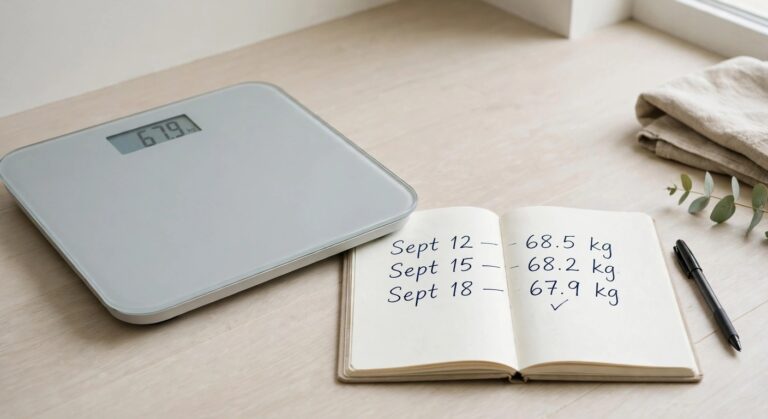
Here is the method. Measure in the morning, after using the bathroom and before eating. Stand relaxed, breathe out naturally, and do not suck in your stomach. Wrap a soft tape measure around your middle at the level of your belly button, keeping it level all the way around and snug without pressing into the skin. Take the reading twice and average the two. Write it down with the date, because the trend over weeks matters far more than any single reading.
Now compare your number with the cutoffs. The National Institutes of Health treats a waist above 102 cm (40 inches) for men and above 88 cm (35 inches) for women as elevated risk. Check the conversion: 102 divided by 2.54 equals 40.2 inches, and 88 divided by 2.54 equals 34.6 inches, which rounds to the familiar 40 and 35 inch cutoffs. The International Diabetes Federation uses lower thresholds for Europeans, 94 cm for men and 80 cm for women, to flag increased risk earlier. If you sit between the two sets of cutoffs, treat that as an early warning, not a pass.
A second at-home check is the waist-to-height ratio. Divide your waist by your height, using the same units for both. The target for most adults is below 0.50, which is the simple rule that your waist should be less than half your height. Worked example: a man with a 96 cm waist and a height of 178 cm gets 96 divided by 178, which equals 0.539, rounded to 0.54. That sits above the 0.50 target, so even though his waist is below the 102 cm cutoff, the ratio flags elevated risk.
A third check is the waist-to-hip ratio. Divide your waist by your hip measurement, taken around the widest part of your buttocks. The World Health Organization flags ratios above 0.90 for men and above 0.85 for women as substantially increased risk. Worked example: a waist of 96 cm and hips of 104 cm gives 96 divided by 104, which equals 0.923, rounded to 0.92. That is above the 0.90 cutoff for men. Our guide on waist-to-hip ratio walks through the full method with more worked examples, and it is worth reading if your waist sits near a cutoff, since the ratio adds context the waist alone cannot give.
Be honest about what the tape cannot do. It cannot separate VAT from subcutaneous fat, so two people with the same waist can carry different amounts of deep fat. Bloating, a large meal, heavy core muscles, and posture all shift the reading by a centimeter or two. That is why you measure under the same conditions, track the average over weeks, and treat a steady downward trend as progress even when the scale barely moves.
What Do DEXA, MRI, and Smart Scales Actually Tell You About Visceral Fat?
If you want a direct number rather than a proxy, imaging is the only way. A DEXA scan, also called a DXA scan, estimates VAT area in square centimeters and VAT volume in cubic centimeters, alongside total body fat and lean mass. The commonly used area thresholds are below 100 square centimeters for lower risk, 100 to 160 for moderate risk, and above 160 for higher risk. One imaging study linked VAT volume below 1000 cubic centimeters with lower cardiometabolic risk. A DEXA scan takes about 10 minutes, costs far less than an MRI, and uses a very small radiation dose, which is why it is the most practical direct measurement for most people.
MRI is the gold standard for research, because it images the fat directly with no radiation. It is also expensive, slow, and hard to access outside hospitals and studies, so it is not a routine choice. CT scanning is equally direct but carries a much higher radiation dose, so it is not used for screening either. For most readers, DEXA is the sensible direct option, and a tape measure is the sensible everyday one.
Smart scales are the most misunderstood tool in this whole topic, and they are the source of the most common reader question: what does my visceral fat rating actually mean? These scales use bioelectrical impedance, sending a weak current through your body and estimating composition from resistance. They cannot distinguish VAT from subcutaneous fat, because the current does not image your abdomen. One analysis found correlations between scale estimates and MRI-derived VAT below 0.40, which is weak, and errors swing widely with hydration, food, exercise timing, and even wet feet.
That does not make the rating useless, but it changes how to use it. Most scales report a visceral fat rating on a scale where 1 to 12 is considered healthy, 13 to 19 is elevated, and 20 or higher is high. Treat that number as a rough trend indicator, never as a diagnosis. Weigh yourself at the same time of day, under the same conditions, and judge the direction over months. If your rating sits above 13 and your waist is above its cutoff too, the two tools agree, and that agreement is worth acting on. If they disagree, trust the tape measure and your lab numbers over the scale.
Our guide on how to calculate body fat compares the full set of body fat measurement methods, from calipers to DEXA, so you can see where each one fits. The key point for this article is narrower: only imaging measures visceral fat directly, proxies estimate it, and scales estimate it worst of all.
Should I Get a DEXA Scan for Visceral Fat?
A DEXA scan is worth considering if you want a direct baseline, if your waist sits near a cutoff and you want certainty, or if you want to track progress precisely over months. It measures visceral fat area and volume directly, takes about 10 minutes, and costs far less than MRI. It is not necessary for everyone: a tape measure plus waist-to-height ratio plus routine labs give most people enough information to act. If you do get one, repeat it no sooner than three to six months later, and discuss the result with your doctor alongside blood pressure, lipids, and blood sugar.
How Can You Reduce Visceral Fat?
The good news comes first, because it surprises most people: visceral fat is the first fat to go. When you lose weight or start exercising, deep abdominal fat shrinks before subcutaneous fat does, and it shrinks proportionally more. Research cited by Johns Hopkins found that a modest weight loss of 5 to 10 percent of body weight can reduce visceral fat by 25 to 40 percent. That means you do not need to reach your dream weight to cut your risk substantially. The first several kilograms matter most.
A modest calorie deficit is the foundation. Aim for roughly 300 to 500 calories per day below maintenance, built on whole foods, with enough protein to protect muscle while you lose fat. Very aggressive deficits backfire for this goal, because they cost muscle, spike hunger, and rarely last. A Mediterranean-style pattern, rich in vegetables, legumes, whole grains, fish, olive oil, and nuts, with fewer ultra-processed foods and sugary drinks, fits the evidence well. One long-term study found that daily sugary drink consumers gained 852 cubic centimeters of VAT over six years, compared with 658 cubic centimeters for non-drinkers. The difference is 852 minus 658, which equals 194 cubic centimeters, and 194 divided by 658 equals 0.295, so about 29 percent more VAT gain from a daily sugary drink habit.
Aerobic exercise is the most proven single lever after diet. Aim for 150 to 300 minutes per week of moderate activity such as brisk walking, cycling, or swimming. The STRRIDE trial found that jogging the equivalent of 12 miles per week reduced VAT by 8.1 percent over eight months, without any dietary change. A meta-analysis of 117 imaging studies with 4815 participants found something even more encouraging: exercise without weight loss was linked to a 6.1 percent fall in VAT, while diet without weight loss showed virtually no change. That means training shrinks deep fat even when the scale refuses to move, which is exactly why waist measurements beat scale weight for tracking this goal.
High-intensity interval training is a time-efficient option, not a requirement. A 2017 meta-analysis in Sports Medicine found that interval training reduced abdominal fat about 28.5 percent more than moderate continuous training. If you enjoy intervals, use them once or twice a week. If you hate them, steady moderate cardio works too, and the best exercise for cutting deep abdominal fat is the one you will still be doing in six months.
Resistance training deserves equal billing. Two to four full-body sessions per week preserve muscle during a calorie deficit, which protects your metabolism and keeps the weight you lose mostly fat. A 2021 meta-analysis in Sports Medicine found that resistance training alone reduced VAT even without weight loss. Strength work also improves insulin sensitivity directly, which attacks the same pathway visceral fat damages.
Sleep and alcohol are the two levers most people underestimate. Aim for 7 to 9 hours of sleep a night. A Mayo Clinic study found that restricting sleep to 4 hours a night increased VAT by 11 percent in just two weeks, and recovery sleep did not fully reverse it. The CARDIA study found that sleeping under 5 hours a night was linked to 32 percent more VAT gain over five years than sleeping 6 to 7 hours. Alcohol is dose-dependent: larger and more frequent drinking is linked to more VAT even after accounting for total body fat, which is the real mechanism behind the beer belly. Cutting back, especially on weeknight and weekend binge patterns, often shrinks the waist within weeks.
Stress management helps, with an honest caveat. Chronic stress raises cortisol, and deep abdominal fat cells carry more cortisol-processing machinery than fat elsewhere, so stress genuinely biases storage toward the abdomen. Daily habits that calm the stress response, a short walk without your phone, slow breathing, regular sleep times, and consistent meals, all help. But cortisol is one thread, not the whole story. For most people, belly fat comes from the combined arithmetic of disrupted sleep, stress eating, less movement, alcohol, and overall calorie balance, not from cortisol alone.
How Fast Can You Expect Visceral Fat to Fall?
Set expectations from arithmetic, not from advertising. A 500 calorie daily deficit adds up to 3500 calories over a week, and since one kilogram of body fat stores roughly 7700 calories, that weekly deficit predicts about 0.45 kilograms of fat loss per week: 3500 divided by 7700 equals 0.454, rounded to 0.45. Over 12 weeks, that is 12 times 0.45, which equals 5.4 kilograms. For a 90 kilogram person, 5.4 divided by 90 equals 0.06, so about 6 percent of body weight. That lands inside the 5 to 10 percent band linked to a 25 to 40 percent reduction in visceral fat, which shows why a 12-week plan is a sensible first milestone rather than a 30-day promise.
In practice, the timeline looks like this. In the first 2 to 4 weeks, your waist trend and your energy usually improve before the scale shows much, especially if you start exercising, since VAT responds to training even without weight loss. By 8 to 12 weeks of a steady deficit plus regular training, most people see a clear waist reduction of several centimeters and a downward trend on any scale rating. By six months, blood markers often follow: triglycerides fall, fasting glucose steadies, and blood pressure eases, because the liver is no longer flooded with fatty acids from deep abdominal fat.
Measure progress the right way. Retake your waist every two weeks under the same morning conditions and plot the average. Ignore single readings after salty meals, heavy training days, or bloated mornings. If you use a smart scale, judge its rating monthly, not daily. If you get a DEXA scan, repeat it no sooner than three to six months later, since smaller intervals mostly show measurement noise. And if your waist is falling while your weight is flat, that is success, not a stall: you are likely losing VAT while gaining or keeping muscle.
One warning belongs here. If your waist is rising fast, or you develop symptoms such as constant thirst, frequent urination, chest pain, or severe breathlessness, see a doctor rather than starting a harder diet. Rapid waist gain with those symptoms can reflect blood sugar problems, fluid retention, or heart trouble, not ordinary fat gain, and those need medical assessment first.
How Long Does It Take to Lose Visceral Fat?
Most people see a measurable waist trend within 8 to 12 weeks of a steady plan. A 500 calorie daily deficit predicts about 0.45 kilograms of fat loss per week, which is about 5.4 kilograms over 12 weeks, or roughly 6 percent of body weight for a 90 kilogram person. That 5 to 10 percent weight loss band is linked to a 25 to 40 percent reduction in VAT. VAT falls before subcutaneous fat, so the waist often shrinks before clothes fit very differently. Blood markers such as triglycerides and fasting glucose typically improve over three to six months.
What Does Not Work for Visceral Fat?
Several popular fixes fail this goal, and naming them saves readers money and months. Spot reduction does not work: abdominal crunches strengthen the muscles under the fat but do not selectively burn the fat above them, let alone the deep fat around your organs. Fat loss follows overall energy balance and genetics, not the muscle you trained that day.
Cortisol-blocking pills, detox teas, and belly-fat burner supplements have no reliable evidence of selectively removing VAT. The supplement industry sells the idea of targeting deep fat because the fear is real, but no pill reroutes fat loss to your abdomen. Waist trainers only compress tissue while worn and can restrict breathing and digestion. Crash diets that slash calories without protein or resistance training cost muscle along with fat, and the regain that follows often restores visceral fat first.
Fasting, keto, and other named diets are a separate question. They can reduce VAT, but only through the same mechanisms as any other approach: a calorie deficit, lower insulin exposure, and adherence you can sustain. A 2017 review found no special VAT advantage for very low-carbohydrate diets beyond the deficit itself. Pick the eating pattern you can follow for a year, not the one with the boldest marketing.
Finally, do not let a single smart scale rating run your life. A rating of 14 on a dehydrated morning is not a diagnosis, and a rating of 9 after a heavy training block is not a clean bill of health. Use the tape, the trend, and your lab numbers together, and let the scale play a supporting role at most.
Do Crunches or Ab Workouts Burn Visceral Fat?
No, not selectively. Ab exercises strengthen the abdominal muscles underneath the fat, but they do not burn the fat above those muscles, and they certainly do not target the deep fat around your organs. Fat loss follows overall energy balance: a calorie deficit plus aerobic and resistance training shrinks visceral fat everywhere, including the abdomen. Core training is still worth doing for strength and back health, but it is not a visceral fat treatment on its own.
Frequently Asked Questions
What is visceral fat in simple terms?
Visceral fat is the deep fat stored inside your abdomen, around organs such as your liver, pancreas, and intestines. Unlike the soft fat under your skin that you can pinch, it is firm, hidden, and metabolically active: it releases fatty acids and inflammatory signals straight to your liver through the portal vein. A small amount is normal, but too much raises your risk of type 2 diabetes, heart disease, and fatty liver disease.
How do I know if my belly fat is visceral fat?
You cannot feel it directly, but three at-home checks estimate it well. Measure your waist at belly-button level: above 102 cm (40 inches) for men or 88 cm (35 inches) for women signals elevated risk. Divide waist by height: below 0.50 is the target. Divide waist by hips: above 0.90 for men or 0.85 for women flags increased risk. A firm, protruding belly points more toward visceral fat, while a soft, pinchable belly points more toward subcutaneous fat. Only DEXA or MRI measures it directly.
What is a healthy visceral fat level?
It depends on the tool. On a DEXA or MRI scan, a visceral fat area below 100 square centimeters is generally considered lower risk, 100 to 160 is moderate, and above 160 is higher risk. On most smart scales, a visceral fat rating of 1 to 12 is considered healthy, 13 to 19 is elevated, and 20 or higher is high, but scale ratings are rough estimates, not diagnoses. By tape measure, a waist below 102 cm for men and below 88 cm for women, plus a waist-to-height ratio below 0.50, is the practical healthy range.
Can you be thin and still have high visceral fat?
Yes. This pattern is sometimes called thin outside and fat inside. Body mass index cannot see where fat sits, so a slim person with little muscle and a firm belly can carry high VAT while scoring a normal BMI. Men, postmenopausal women, heavy drinkers, poor sleepers, and very inactive people are more likely to show this pattern. Waist measurement and lab numbers such as triglycerides and fasting glucose catch it far better than weight alone.
Does walking reduce visceral fat?
Yes, especially if you are starting from a low activity level. Brisk walking at a pace that raises your heart rate counts as moderate aerobic exercise, and trials show that 150 to 300 minutes per week of moderate activity reduces visceral fat even without dietary change. In the STRRIDE trial, jogging the equivalent of 12 miles per week cut visceral fat by 8.1 percent over eight months with no diet change. Walking works best combined with a modest calorie deficit and two weekly strength sessions, but walking alone still beats staying sedentary.