Is BMI Accurate? What Your Number Gets Right and Wrong
If you typed is BMI accurate into Google, you probably got a number you do not trust. Maybe it called you overweight even though you lift weights. Maybe it called you healthy even though your belly keeps growing. Either way, the label did not match the person in the mirror.
Here is the short version. BMI is a useful screening tool and a poor personal verdict. It flags likely obesity across large groups well, and it describes any one body badly.
Quick Answer: Is BMI Accurate?
Is BMI accurate enough to trust on its own? No. BMI is accurate as a first screen, not as a final answer. A BMI of 30 or higher almost always means excess body fat, so a high reading deserves attention. But a normal BMI misses about half of the people who actually carry too much body fat, so a healthy label is not proof that all is well.
Trust a high reading as a warning. Never treat a normal reading as a clean bill of health. Pair BMI with two more checks, waist circumference and body fat percentage, and you get a picture you can act on.
What Is BMI and How Is It Calculated?
BMI stands for body mass index. It is your weight in kilograms divided by the square of your height in meters. The imperial version is 703 times your weight in pounds, divided by your height in inches squared. If you want your number, work it out with our BMI calculator.
Take a man who is 5 feet 10 inches tall and weighs 209 pounds. His BMI is 703 times 209, divided by 70 squared, which comes to about 30. That puts him at the start of the obesity range. The standard adult categories are:
| BMI | Category |
|---|---|
| Below 18.5 | Underweight |
| 18.5 to 24.9 | Healthy weight |
| 25.0 to 29.9 | Overweight |
| 30.0 to 34.9 | Obesity class 1 |
| 35.0 to 39.9 | Obesity class 2 |
| 40.0 or higher | Obesity class 3 (severe) |
These cutoffs come from large population studies. They were never meant to describe one person in full.
When Is BMI Accurate?
Is BMI accurate when it says someone has obesity? Mostly, yes. In a pooled analysis of 25 studies covering nearly 32,000 people, a BMI of 30 or higher was right about 9 times out of 10 when it flagged someone as having excess body fat. False alarms are rare at that level. If your BMI is 35 or 40, it is very unlikely to be a muscle artifact.
BMI is also accurate as a population tool. It is free, instant, and needs no equipment, which is why doctors and researchers use it to track obesity trends across millions of people. The CDC notes that BMI should be considered alongside other factors such as blood pressure and cholesterol, not used alone (CDC, About Body Mass Index (BMI)).
So BMI earns its place as a first screen. The mistake is stopping there.
1. It Cannot Tell Muscle From Fat
This is the most famous flaw, and it is real. BMI sees weight, not composition. A kilogram of muscle and a kilogram of fat count exactly the same, even though muscle is denser and far healthier to carry.
That is why lifters get strange labels. Many NFL players have BMIs over 30 with body fat under 15 percent. Sprinter Usain Bolt has been calculated at nearly overweight by BMI, and Tom Brady has been calculated as overweight. None of them were carrying excess fat. If you train with weights, your BMI is measuring your muscle as if it were a problem. A better check is your lean tissue, which our lean body mass calculator estimates from your weight and body fat percentage.
One honest caveat: the muscle excuse is often overstated. Most people with a BMI over 30 do carry excess fat, and research found similar cardiometabolic risk at a BMI over 30 whether lean mass was high or low. But a BMI of 26 or 27 in a strong, active person is a different story from the same number in a sedentary one.
2. It Ignores Where You Carry Fat
Two people with the same BMI can carry very different risks, because BMI says nothing about fat distribution. Belly fat, especially the visceral fat packed around your organs, drives far more risk than fat on the hips and thighs. It raises the odds of type 2 diabetes, heart disease, and stroke.
This is why waist circumference matters so much. Researchers commonly flag a waist above 94 cm for men and 80 cm for women in white populations, and above 90 cm for men and 80 cm for women in Asian populations, as a sign of increased risk. A person with a BMI of 24 and a 105 cm waist is in more danger than a person with a BMI of 27 and an 82 cm waist. If belly fat is your concern, our guide to how to lose belly fat explains the approach that actually shrinks it.
3. It Misses Skinny Fat
The most dangerous BMI error runs in the opposite direction. Normal weight obesity, often called skinny fat, means a healthy BMI paired with a high body fat percentage and low muscle mass. BMI is blind to it, because it only sees total size.
In a large 2016 study of more than 40,000 Americans, nearly 30 percent of normal weight people turned out to be cardiometabolically unhealthy, while nearly half of overweight people were metabolically healthy. A normal BMI can hand out false reassurance to people who need a wake up call. If you are light on the scale but soft around the middle, your BMI is hiding the problem.
4. It Was Not Built for Every Body
BMI cutoffs come mostly from data on non-Hispanic white populations, and the American Medical Association called BMI an imperfect measure in 2023 for this reason. The same BMI does not mean the same risk for everyone.
At the same BMI, Asian women have been found to carry about double the type 2 diabetes risk of white women, and Black and Hispanic women a slightly higher risk. That is why a World Health Organization expert consultation suggested lower public health action points for many Asian populations:
| Group | Overweight action point | Obesity action point |
|---|---|---|
| General WHO cutoffs | 25 | 30 |
| Many Asian populations | 23 | 27.5 |
Sex matters too. BMI uses the same formula for men and women, yet women naturally carry more body fat than men at the same BMI, some of it essential for hormonal health. Two people with a BMI of 24, one male and one female, do not have the same body composition.
5. Age Changes What BMI Means
BMI gets less reliable as you age. Muscle mass falls, fat shifts toward the belly, and height can shrink, all of which distort the number. An older adult with a BMI of 24 may have far more body fat and far less muscle than a younger adult with the same number.
This is sarcopenia, the age related loss of muscle, and BMI cannot detect it. Some studies even find that a slightly higher BMI in older adults is linked with better survival, possibly because a little extra reserve helps during illness. That does not make a BMI of 32 healthy. If you are over 65, judge your BMI alongside your waist, your strength, and what your doctor sees.
6. It Does Not Work During Pregnancy or for Children
BMI should not be used to judge weight during pregnancy. Pregnancy weight gain includes the baby, the placenta, amniotic fluid, and extra blood volume, all of which are healthy. What matters is your pre-pregnancy BMI, which doctors use to set a healthy weight gain range. Calculating BMI mid-pregnancy and comparing it to adult cutoffs is meaningless.
Children are a different case again. For ages 2 to 19, BMI is interpreted as a percentile against CDC growth charts for the same age and sex, not against adult cutoffs. Underweight is below the 5th percentile, healthy weight is the 5th to below the 85th, overweight is the 85th to below the 95th, and obesity is the 95th percentile or higher.
Is BMI Accurate During Pregnancy?
No. Pregnancy weight gain includes the baby, placenta, amniotic fluid, and extra blood volume, so comparing a mid-pregnancy BMI to adult cutoffs is meaningless. What matters is your pre-pregnancy BMI, which your doctor uses to set a healthy gain range.
Is BMI Accurate for Children and Teens?
Only as a percentile, never against adult cutoffs. For ages 2 to 19, BMI is plotted on CDC growth charts for the same age and sex. Underweight is below the 5th percentile, healthy weight is the 5th to below the 85th, overweight is the 85th to below the 95th, and obesity is the 95th percentile or higher. A pediatrician should interpret it.
Same BMI, Three Very Different Bodies
The fastest way to see why is BMI accurate is the wrong question is to run three people through it. Only one of them gets a useful label from BMI alone.
| Person A: Lifter | Person B: Skinny fat | Person C: High body fat | |
|---|---|---|---|
| Height | 1.78 m | 1.75 m | 1.70 m |
| Weight | 95 kg | 70 kg | 85 kg |
| BMI | 30.0 | 22.9 | 29.4 |
| BMI label | Obese | Healthy weight | Overweight |
| Body fat | 12% | 28% | 32% |
| Waist | 84 cm | 96 cm | 104 cm |
| Waist to height | 0.47 | 0.55 | 0.61 |
| Real story | Lean and muscular | Hidden excess fat | Excess fat, as BMI suggests |
Person A is the case BMI gets wrong by overcalling. Person B is the case it gets wrong by missing. Person C is the case it gets right. One number cannot tell these three apart. Two more checks can.
What Should You Use Instead of BMI?
Nothing replaces BMI for free instant screening. But several measures beat it for describing one person.
| Measure | What it tells you | Cost and effort | Best for |
|---|---|---|---|
| BMI | Weight vs height | Free, seconds | First screening |
| Waist circumference | Belly fat and visceral fat risk | Free, tape measure | Everyone, alongside BMI |
| Waist to height ratio | Belly fat relative to height | Free, simple math | Quick second check |
| Body fat percentage | How much of you is fat | Low to moderate, scale or calipers | Lifters, skinny fat, tracking change |
| DEXA scan | Exact fat, muscle, and bone | High, clinic visit | Gold standard when precision matters |
The simplest upgrade is the waist to height ratio. Divide your waist by your height, both in the same units. Aim for under 0.5, which means keeping your waist less than half your height. In the table above, only the lifter passes.
For body fat percentage, our body fat percentage calculator gives an estimate from simple measurements. It is not as precise as a DEXA scan, but it separates fat from muscle, which is exactly the thing BMI cannot do.
What Should I Use Instead of BMI?
Use the 3-check method: BMI plus waist to height ratio plus body fat percentage. Keep your waist under half your height and estimate your body fat with the body fat percentage calculator. For a definitive picture, a DEXA scan measures fat, muscle, and bone exactly.
The 3-Check Method: When to Trust Your BMI
Stop asking is BMI accurate as a yes or no question. Run three checks and read them together.
Check 1: Your BMI. Calculate it. If it is 30 or higher, take it seriously. It is right about 9 times out of 10. If it is in the healthy range, do not celebrate yet. Move to check 2.
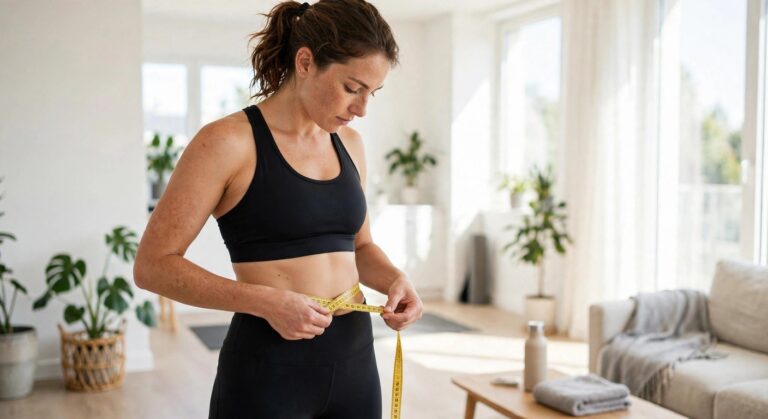
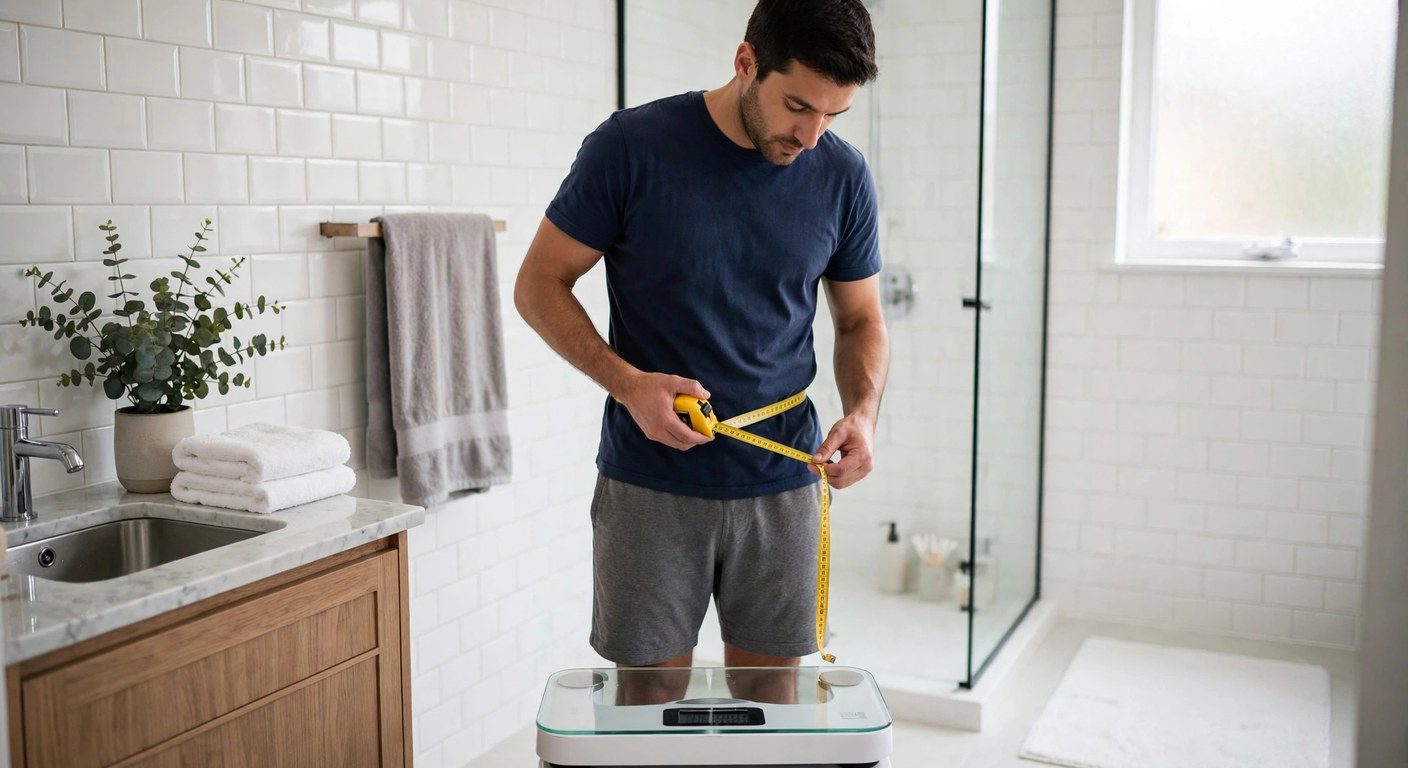
Check 2: Your waist and waist to height ratio. Measure your waist at the navel, relaxed, after breathing out. Divide it by your height. Under 0.5 is reassuring. Over 0.5 means belly fat is a problem even if your BMI is normal. Over 0.6 means it is a priority.
Check 3: Your body fat percentage. Estimate it with a calculator, calipers, or a smart scale. As a rough guide, a healthy range is about 10 to 20 percent for men and 18 to 28 percent for women, with athletes at the lower end. If your BMI says healthy but your body fat says high, believe the body fat number.
Now read the combination:
- High BMI plus high waist plus high body fat: BMI was right. Focus on fat loss.
- High BMI plus low waist plus low body fat: BMI was fooled by muscle. Keep training, and judge progress by waist and body fat.
- Normal BMI plus high waist or high body fat: BMI missed it. This is the skinny fat trap, and it needs the same attention as a high BMI.
- Normal BMI plus low waist plus low body fat: all three agree. BMI was right.
If your BMI is above your healthy range, our ideal weight calculator shows the weight range that fits your height. Pair it with the 3-check method so you chase the right number.
What Should You Do This Week?
If is BMI accurate is still on your mind, stop debating the number and measure the three things that settle it.
- Calculate your BMI and write it down with your weight and height.
- Measure your waist at the navel and divide it by your height for your waist to height ratio.
- Estimate your body fat percentage with our body fat calculator or a smart scale.
- Read the three numbers together using the combinations above.
- Pick one action based on the result: cut 300 to 500 calories a day if all three point to excess fat, add two strength sessions a week if you are skinny fat, or keep your routine if all three agree you are healthy.
Then recheck in four weeks. BMI alone moves slowly and tells you little. Waist and body fat move faster and tell you the truth. For a personal assessment, talk to your doctor.
Frequently Asked Questions
Is BMI accurate?
Is BMI accurate as a screening tool? Partly. A BMI of 30 or higher usually means excess body fat, so a high reading is worth taking seriously. But a normal BMI misses about half of the people who carry too much body fat. Use BMI as a first screen, then confirm it with your waist and body fat percentage.
Is BMI accurate for athletes and lifters?
Is BMI accurate for athletes and lifters? Usually not. Muscle weighs more than fat, so a muscular person can land in the overweight or obese range with low body fat. If you lift weights and your BMI is 25 to 30, check your waist and body fat before deciding you need to lose weight. A waist to height ratio under 0.5 with low body fat means BMI is misleading you.
Is BMI accurate if I am skinny fat?
Is BMI accurate for skinny fat? No, this is the case it misses most. Normal weight obesity means a healthy BMI with a high body fat percentage and low muscle mass. BMI only sees total size, so it calls you healthy while belly fat and low muscle raise your risk. Waist and body fat percentage catch what BMI cannot.
Is BMI accurate for older adults?
Is BMI accurate for older adults? Less than for younger adults. Muscle loss with age means an older person can have a healthy BMI and still carry too much fat, and height loss can distort the number further. Judge BMI alongside waist, strength, and how you move, and ask your doctor what range fits you.
Is BMI accurate for Asian populations?
Is BMI accurate for Asian populations? The standard cutoffs underestimate risk. Research shows higher diabetes risk at lower BMIs, and a WHO expert consultation suggested lower public health action points of 23 for overweight and 27.5 for obesity for many Asian populations. Waist cutoffs are also lower: above 90 cm for men and 80 cm for women signals increased risk.