Chipotle Nutrition Guide (Calories, Macros and Healthy Choices)
Introduction:
Chipotle is one of the most popular fast food restaurants in the United States. Millions of people eat there every week. Some go for a quick lunch. Some go after the gym. Some just want something that tastes good without feeling too guilty about it.
The problem is that most people have no real idea how many calories are in their order. One bowl can be 650 calories. Another can be over 1,200. The difference comes down entirely to what you put in it.
This guide covers everything you need to know about Chipotle nutrition, including calories, protein, carbs, fat, healthy choices, and how to build a meal that actually fits your goals.
What Does Chipotle Nutrition Actually Mean
When people talk about nutrition, they usually mean four things: calories, protein, carbs, and fat. These four numbers tell you most of what you need to know about any meal.
Calories are the total energy in your food. Your body uses them to function every day. Eat more than you burn, and you gain weight. Eat less and you lose it. It really is that simple at the basic level.
Protein helps build and repair muscle. It also keeps you feeling full longer than carbs or fat. Whether you work out every day or sit at a desk, your body needs enough protein to function properly.
Carbs give your body quick energy. Rice, beans, and tortillas are the main carb sources at Chipotle. They are not bad foods, but the amounts matter a lot when you are watching your intake.
Fat supports brain function and keeps you satisfied after a meal. Cheese, sour cream, and guacamole are the main fat sources at Chipotle. They taste great but they add calories quickly.
Knowing these four numbers for your Chipotle order helps you make smarter choices every time you go.
Chipotle Calories Overview
Not all Chipotle meals are equal, and the calorie range is wider than most people realize.
A simple chicken bowl with rice, beans, and salsa is around 650 to 750 calories. Add sour cream, cheese, and guacamole to that same bowl, and you are easily over 1,100 calories. Same restaurant, same basic meal, completely different calorie count.
The biggest calorie contributors at Chipotle are:
Flour Tortilla: Around 320 calories White Rice: About 210 calories per serving Guacamole: Around 230 calories per serving Sour Cream: About 115 calories Cheese: Around 110 calories
Your meal format makes a huge difference too.
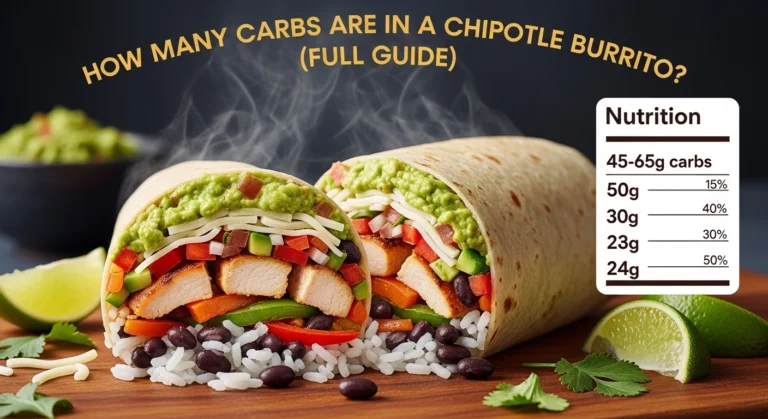
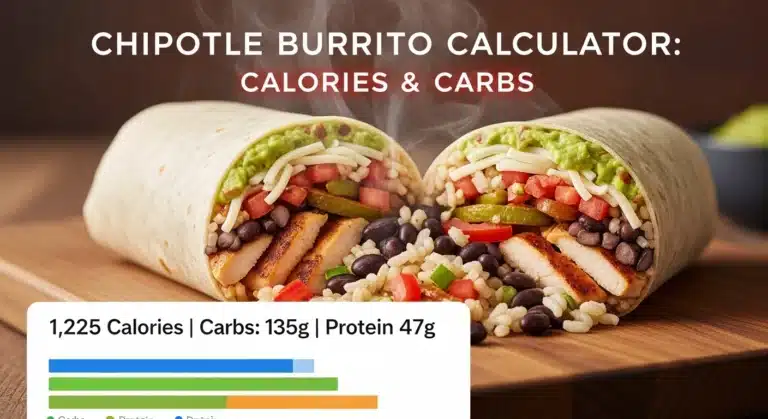
Burritos are the highest calorie option because of the large flour tortilla. The tortilla alone adds 320 calories before you choose a single filling.
Bowls give you much more control. Skip the tortilla and you save 300 calories instantly. You can build a genuinely filling and balanced meal in a bowl format.
Tacos use smaller tortillas so the portions are naturally smaller. Three tacos with good toppings can be a very reasonable meal.
Salads have the lowest base calories of any Chipotle format. The romaine lettuce adds almost no calories. Just be careful with the dressing which adds 220 calories on its own.
Chipotle Macros Guide
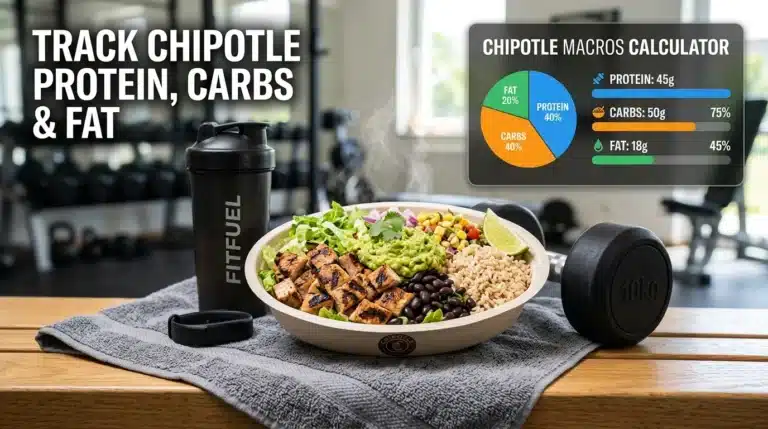
“Macros” is short for “macronutrients,” which means protein, carbs, and fat. Tracking your macros helps you stay on target whether you are building muscle, losing weight, or just trying to eat a balanced diet.
Protein Sources at Chipotle
Chicken: About 32g of protein per serving with only 180 calories. The best protein to calorie ratio on the menu. Steak: Around 21g of protein. Slightly higher in fat than chicken. Barbacoa: About 24g of protein. Slow cooked beef with good flavor. Carnitas: About 23g of protein but higher in fat at 210 calories per serving. Sofritas: Around 10g of protein. A good plant based option but lower in protein than meat choices.
If protein is your main priority, chicken is the clear winner at Chipotle.
Carb Sources at Chipotle
White Rice: About 40g of carbs per serving Brown Rice: Similar carbs with slightly more fiber Black Beans: Around 22g of carbs with good fiber and some protein Pinto Beans: Similar to black beans Flour Tortilla: About 50g of carbs on its own
If you are watching your carb intake, skipping the tortilla and reducing your rice portion makes a significant difference to your total.
Fat Sources at Chipotle
Guacamole is the highest fat item at Chipotle, but it comes from avocado, which is a source of healthy unsaturated fat. The problem is not the type of fat but the total calories it adds to your meal.
Cheese and sour cream both add around 9g of fat per serving, and they are sources of saturated fat. They are fine occasionally, but they are the easiest items to skip when cutting calories.
Chipotle Healthy Options
Chipotle can absolutely be a healthy meal. The ingredients are real whole foods with no artificial additives or preservatives. The question is not whether Chipotle is healthy but whether your specific order is healthy.
Good low calorie choices:
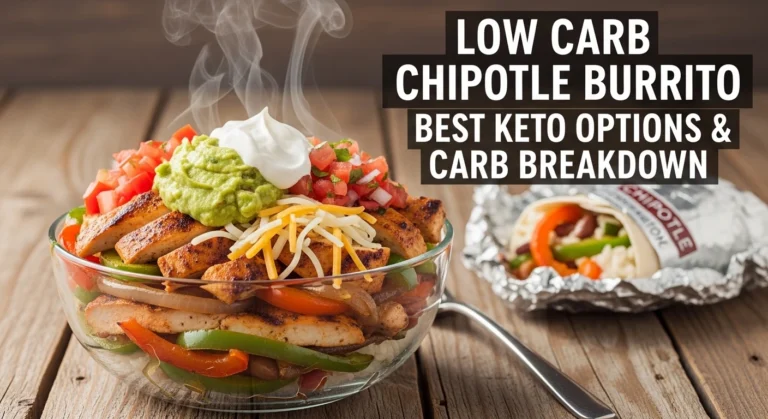
A salad bowl with chicken, fajita veggies, fresh salsa, and lettuce comes in around 300 to 400 calories. That is an exceptional meal by any standard.
Three chicken tacos on crispy corn shells with fresh salsa and lettuce is around 580 to 620 calories with over 90 grams of protein.
Good high protein choices:
A chicken bowl with rice, black beans, and fresh salsa gives you a well balanced meal with around 40 grams of protein.
Skipping cheese and sour cream keeps the fat in check without losing much flavor.
Best low calorie toppings to load up on:
Fresh Tomato Salsa: 25 calories Fajita Veggies: 20 calories Romaine Lettuce: 5 calories Tomatillo Green Salsa: 15 calories Tomatillo Red Salsa: 30 calories
These toppings add real flavor and volume to your meal with almost no calorie cost.
How to Build a Healthy Chipotle Meal
Step 1: Choose your meal format. A bowl gives you the most flexibility and the lowest base calories. A salad is even lighter. A burrito is fine occasionally, but the tortilla adds 320 calories that you need to account for.
Step 2: Pick your protein. Chicken gives you the best protein to calorie ratio. Steak and barbacoa are solid alternatives. If you want more protein without doubling your full portion, ask for a small extra serving on the side.
Step 3: Control your carbs. Choose either rice or beans, not both, if you are watching your calories. Skipping both saves around 340 calories and brings your total way down without making your meal feel empty.
Step 4: Add smart toppings. Lettuce, fajita veggies, fresh salsa, and tomatillo salsa are all very low calorie and add a lot of flavor and volume. Add guacamole only if you have the calorie budget for it that day.
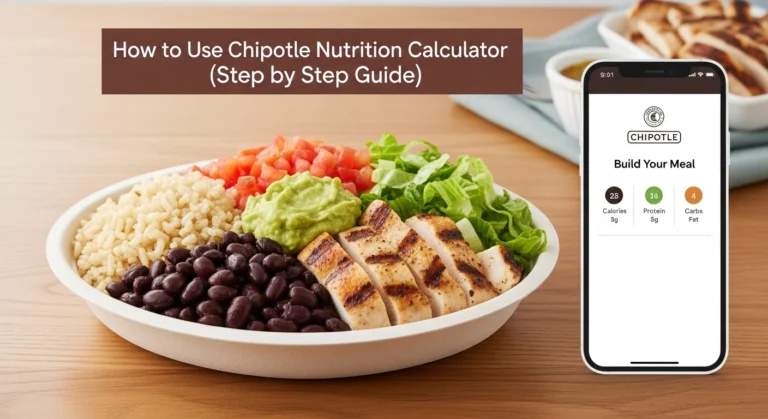
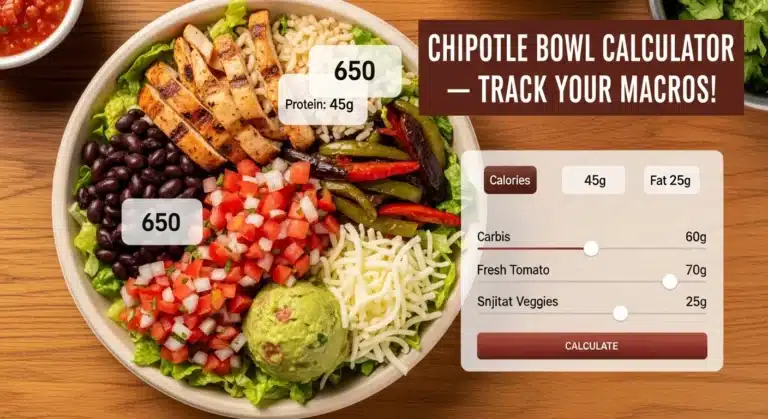
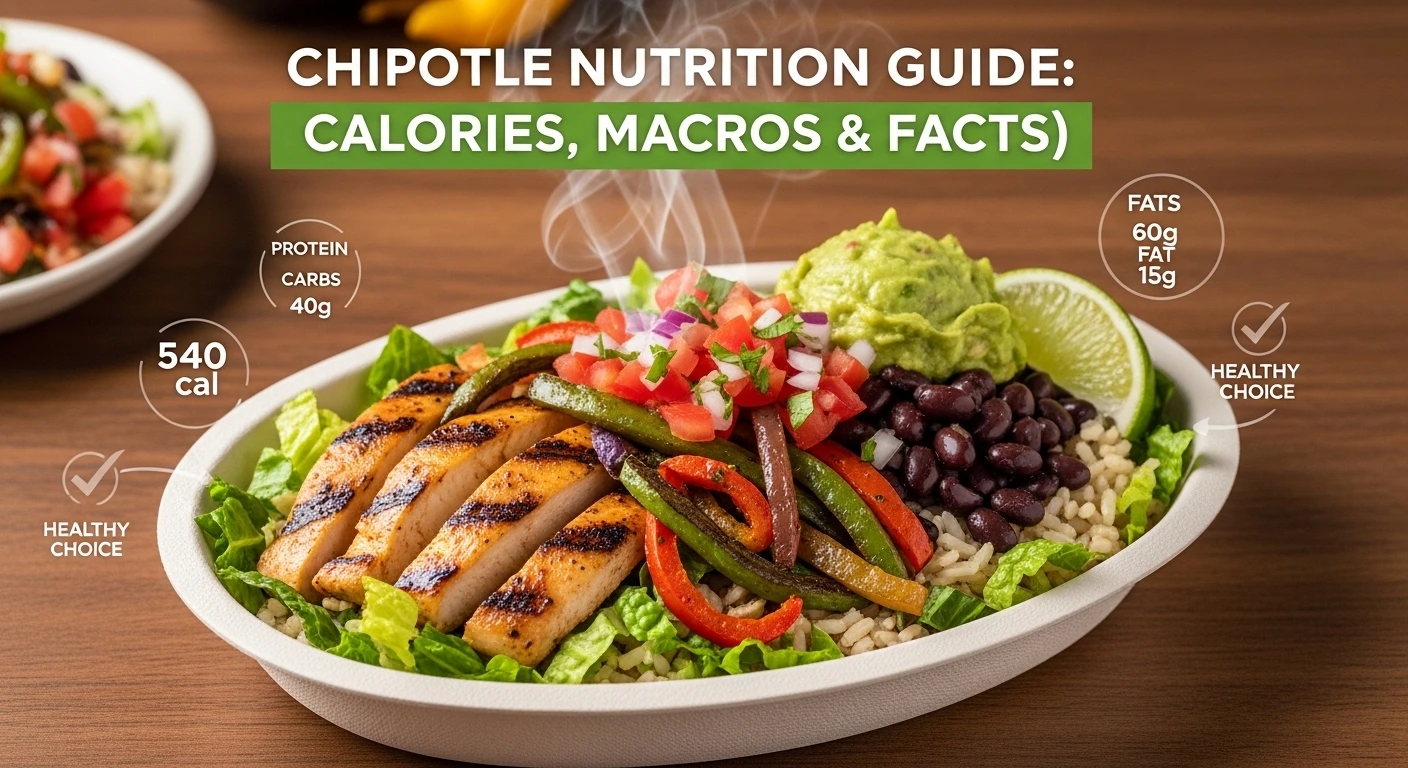
A good example of a healthy bowl: chicken, brown rice, black beans, fajita veggies, fresh tomato salsa, and romaine lettuce. Around 650 calories with 40 grams of protein and a good balance of nutrients.
Chipotle Nutrition for Weight Loss
Chipotle works very well for weight loss when you order smart. The key is knowing where the calories are coming from. Watch your total calories. A bowl that looks healthy can still be over 1,000 calories if you are not careful. Small additions like guacamole, cheese, and sour cream add up to over 400 extra calories without you realizing it.
Keep your order simple. Stick to four or five ingredients, and you will have a cleaner lower calorie meal that is easier to track.
Prioritize protein. A high protein meal keeps you full for longer, which means fewer snacks later in the day. Chicken with black beans is one of the best combinations for staying full without going over on calories. Skip liquid calories. Fountain drinks add 200 to 300 empty calories. Water keeps your total clean.
A simple weight loss Chipotle order: Chicken, half serving of brown rice, black beans, fresh salsa, and lettuce. Around 550 to 600 calories with 38 to 42 grams of protein. That is a genuinely filling balanced meal that fits most calorie targets.
Common Mistakes People Make at Chipotle
Adding too many toppings. Guacamole, cheese, and sour cream together add over 450 calories to an otherwise lean meal. Most people add all three without thinking about it.
Not counting the tortilla. A flour burrito tortilla has around 320 calories. Most people never think about this. Switching to a bowl or corn tortillas saves a significant amount.
Assuming veggie means low calorie. A veggie burrito with cheese, sour cream, guacamole, and rice can easily reach 1,000 calories or more. Drinking calories on the side. A large soda adds 200 to 300 empty calories. Easy to forget and easy to fix.
Chipotle Menu Calorie Overview
Burritos: Chicken Burrito: 1,000 to 1,100 calories with rice, beans, cheese, sour cream Steak Burrito: 1,050 to 1,150 calories Veggie Burrito: 900 to 1,000 calories
Bowls: Chicken Bowl with rice and beans: 700 to 800 calories Steak Bowl: 730 to 830 calories Sofritas Bowl: 600 to 700 calories
Salads: Chicken Salad without dressing: 400 to 500 calories Steak Salad: 430 to 530 calories
Tacos (3 tacos): Chicken Tacos on corn tortilla: 500 to 600 calories Steak Tacos on flour tortilla: 600 to 700 calories
These are estimates based on standard toppings. Your actual calories depend on your exact order.
Useful Calculators
Use our free Chipotle Tacos Nutrition Calculator to see the exact calorie count for your taco order
Use our free Chipotle Salad Nutrition Calculator to build your perfect salad and see the full nutrition breakdown.
Conclusion
Chipotle is not inherently healthy or unhealthy. It all comes down to what you put in your order. The most important thing to remember is that small swaps make a big difference. Choosing a bowl over a burrito saves 320 calories. Skipping sour cream saves 115 calories. Loading up on free veggie toppings adds volume and nutrition without adding calories.
Once you know where the calories come from, Chipotle is actually one of the easier fast food restaurants to eat well at. You have full control over every ingredient in your meal. Use that to your advantage.